
Overview
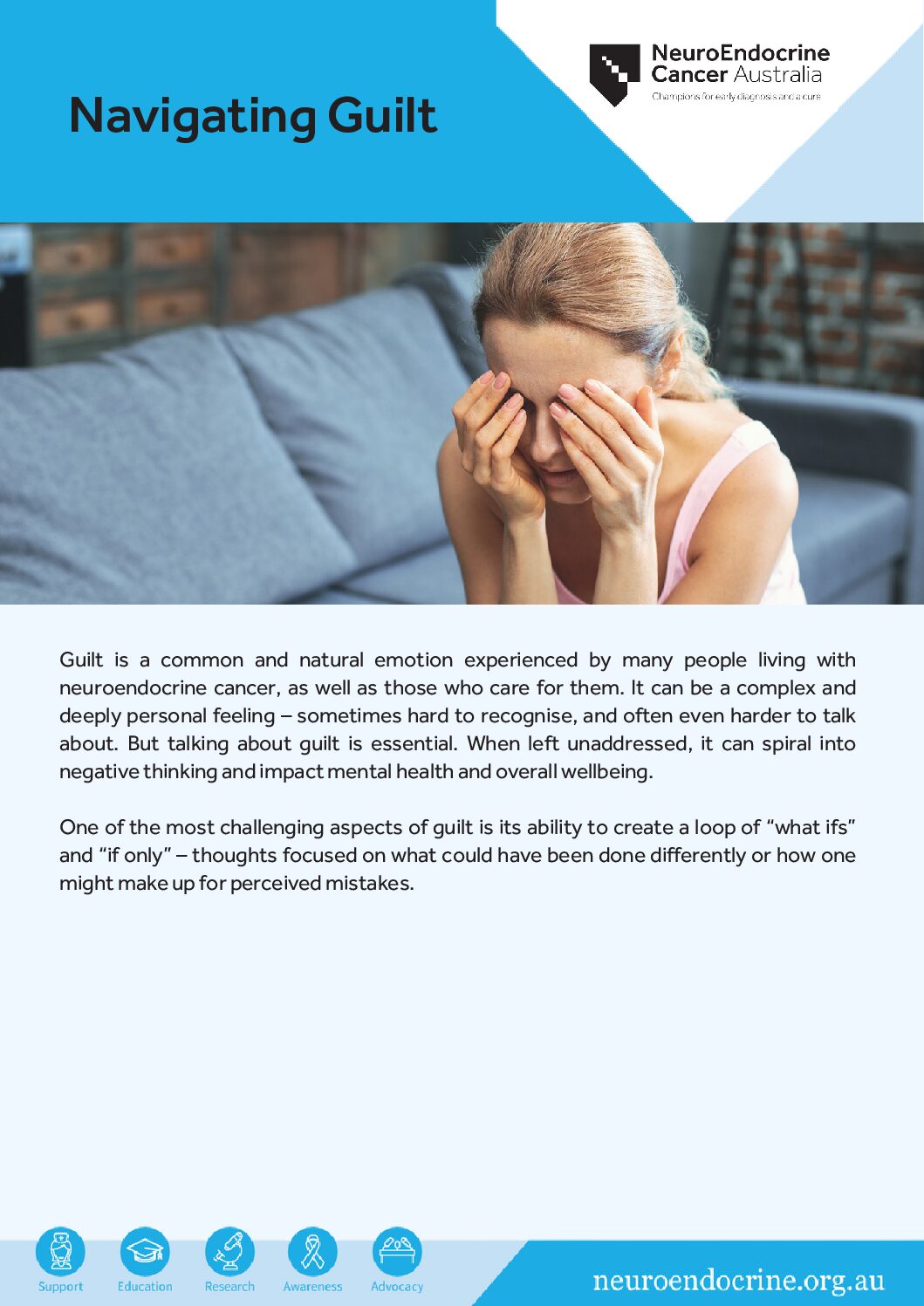
Guilt is a common and natural emotion experienced by many people living with neuroendocrine cancer, as well as those who care for them. It can be a complex and deeply personal feeling – sometimes hard to recognise, and often even harder to talk about. But talking about guilt is essential. When left unaddressed, it can spiral into negative thinking and impact mental health and overall wellbeing.
One of the most challenging aspects of guilt is its ability to create a loop of “what ifs” and “if only” – thoughts focused on what could have been done differently or how one might make up for perceived mistakes.
How guilt can manifest
Guilt doesn’t always look the same. It can show up in many subtle or obvious ways, such as:
- Feeling uncomfortable about asking for help
- Not wanting to burden loved ones
- Regret over past lifestyle choices
- Neglecting personal self-care or not taking time away from caregiving
- Obsessing over what may have caused cancer
- Experiencing survivor guilt
Understanding survivor guilt
Survivor guilt is particularly common among those who have reached a point of stability or even, remission.
Survivor guilt varies from person to person, just like the cancer experience itself. Survivor guilt may take the form of:
- Comparing your treatment experience to others and feeling guilty if it was “easier”
- Struggling to celebrate milestones, like the end of treatment
- Feeling pressure to achieve something extraordinary after recovery
- Holding yourself to higher standards than others
- Feeling unworthy of survival
Recognising and naming guilt
To cope with guilt – including survivor guilt – it’s important to first acknowledge how it’s affecting you. Guilt often brings emotional weight: anxiety, tension, a sense of burden. It may lead to over-responsibility, selfblame, and difficulty forgiving yourself.
Strategies for Coping
There are many constructive ways to manage and reduce the impact of guilt. Here are some general strategies to consider:
1.Forgive yourself
Show yourself the same compassion you would offer to a friend.
2. Accept imperfection
We all have good days and bad days.
3. Prioritise self-care
If you’re a carer, remember that looking after yourself isn’t selfish – it’s necessary.
4. Remember: You didn’t choose this
Survivor guilt can be eased by accepting that your illness was never a choice.
5. Give back, but gently
Helping others can be healing but know your limits.
6. Join a support group
Shared experiences can offer clarity and comfort. Reach out to our support groups or consider attending with someone you trust.
7. Practice gratitude
Focusing on small positives can shift your perspective.
8. Use a daily mantra
Try something grounding like: “The past cannot be changed, but I can choose what I do now.”
9. Be mindful
Stay connected to the present moment to avoid spiralling thoughts.
10. Redirect your energy
Guilt can be a drain. Instead, channel your energy into meaningful activities – volunteering, connecting with others, or simply being kind to yourself.
Turning guilt into growth
Guilt, when recognised and managed, can become a signal for reflection and positive change. It can push us toward more meaningful connections, self-awareness, and even a renewed sense of purpose. But it should never be allowed to weigh you down in silence.
If guilt becomes overwhelming, don’t hesitate to seek professional help or talk to someone you trust.
