
What is Scanxiety?
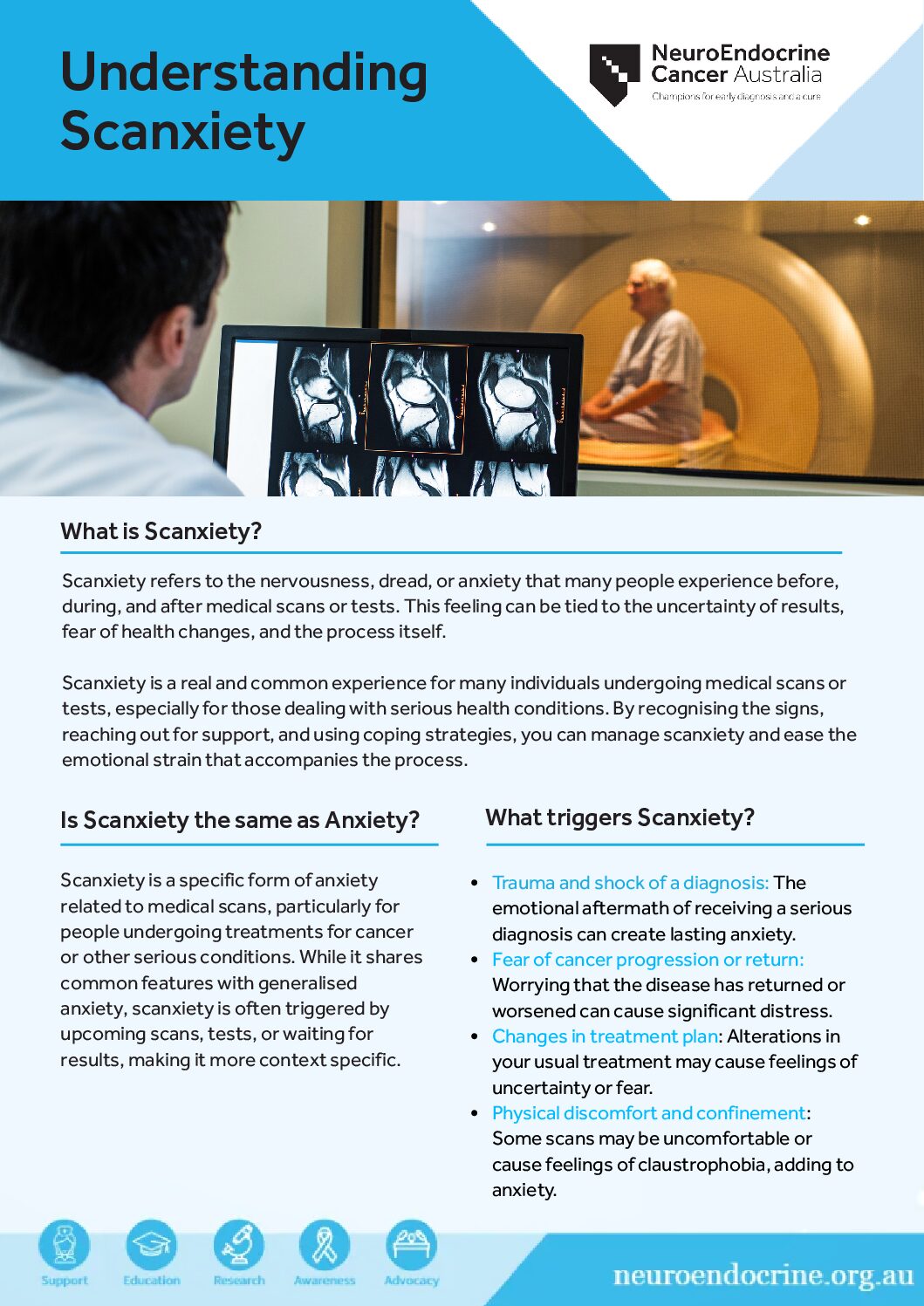
Scanxiety refers to the nervousness, dread, or anxiety that many people experience before, during, and after medical scans or tests. This feeling can be tied to the uncertainty of results, fear of health changes, and the process itself.
Scanxiety is a real and common experience for many individuals undergoing medical scans or tests, especially for those dealing with serious health conditions. By recognising the signs, reaching out for support, and using coping strategies, you can manage scanxiety and ease the emotional strain that accompanies the process.
Is Scanxiety the same as Anxiety?
Scanxiety is a specific form of anxiety related to medical scans, particularly for people undergoing treatments for cancer or other serious conditions. While it shares common features with generalised anxiety, scanxiety is often triggered by upcoming scans, tests, or waiting for results, making it more context specific.
What triggers Scanxiety?
- Trauma and shock of a diagnosis: The emotional aftermath of receiving a serious diagnosis can create lasting anxiety.
- Fear of cancer progression or return: Worrying that the disease has returned or worsened can cause significant distress.
- Changes in treatment plan: Alterations in your usual treatment may cause feelings of uncertainty or fear.
- Physical discomfort and confinement: Some scans may be uncomfortable or cause feelings of claustrophobia, adding to anxiety.
How to manage scanxiety
Scanxiety varies for each person, but here are some general strategies that may help:
1. Lead-up to the scan
- Recognise scanxiety: Identify the physical and emotional signs of anxiety so you can address it.
- Label it: Acknowledge your feelings as “scanxiety” to normalise the experience.
- Connect with supportive people: Spend time with family, friends, or colleagues who make you feel safe and comforted.
- Maintain a healthy lifestyle:
- Regular exercise and relaxation techniques like meditation can help reduce stress.
- Keep a balanced diet, avoiding too much sugar or caffeine, which may worsen anxiety.
- Prepare information: Ensure you have all necessary documents and details about the scan, such as referral letters or instructions.
- Choose morning appointments: Whenever possible, request morning scans to avoid delays.
2. During the Scan
- Bring a support person: A friend, family member, or support group can provide comfort.
- Distraction techniques: Try to occupy your mind by listing things you enjoy or focusing on trivia, like birthdays.
- Breathing and Mindfulness: Practice deep breathing, meditation, and mindfulness exercises to stay calm. A counsellor can work with you ahead of time to help you develop these skills.
- Communicate with the technician: Let the technician or nurse know if you are feeling anxious. They may offer support or medication if needed.
3. Waiting for Results
- Stay engaged in joyful activities: Keep yourself busy with activities that bring you happiness.
- Talk to support people: Lean on your support network, whether family, friends, or a support group.
- Meditation and relaxation: Continue using techniques that help you manage stress.
- Help others: Doing something kind for others can distract from your own worries and foster a sense of purpose.
- Positive self-talk: Remind yourself of your resilience. You have the strength to cope with whatever comes your way.
