
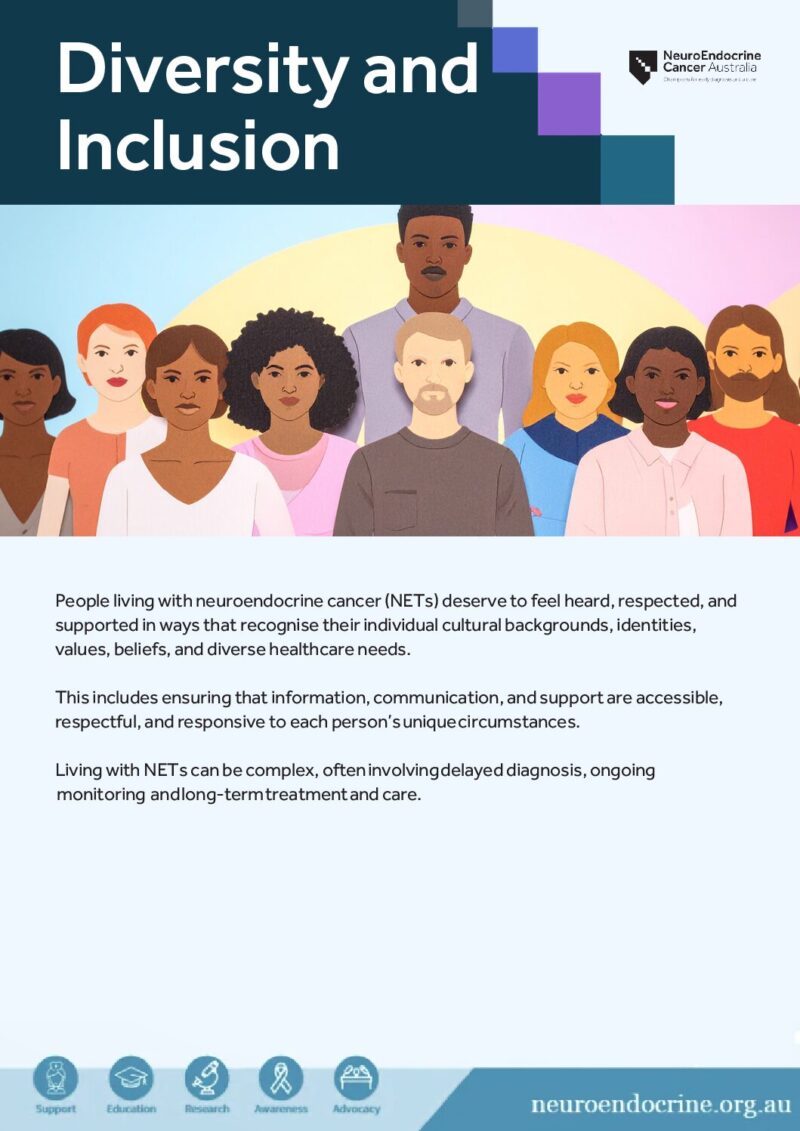
People living with neuroendocrine cancer (NETs) deserve to feel heard, respected, and supported in ways that recognise their individual cultural backgrounds, identities, values, beliefs, and diverse healthcare needs.
This includes ensuring that information, communication, and support are accessible, respectful, and responsive to each person’s unique circumstances.
Living with NETs can be complex, often involving delayed diagnosis, ongoing monitoring and long-term treatment and care.
Diversity
Diversity can influence how people experience and access healthcare, treatment and support services, including:
- Understanding diagnosis
- Accessing healthcare services
- Communicating symptoms and concerns
- Making treatment decisions
- Engaging with healthcare professionals
- Seeking and using support services
Recognising these differences helps improve trust, understanding, health outcomes and meeting the needs of people living with neuroendocrine cancer and their families.
Strategies
Strategies that may help ensure your needs are heard, respected, and understood:
- Write down questions or concerns before appointments
- Clearly communicate symptoms, concerns, and what matters most to you
- Let your healthcare team know about your cultural, spiritual, language or personal preferences
- Ask for clarification if something is unclear or confusing
- Request an interpreter or communication support if needed
- Bring a support person or family member to appointments
- Ask for information to be repeated, written down, or summarised after the consultation
- Let your healthcare team or support person know if you feel your needs are not being fully understood
- Request telehealth/video appointments if this improves communication and accessibility
- Confirm next steps before leaving or ending a consultation
Our commitment
At NeuroEndocrine Cancer Australia (NECA), we are committed to supporting the health and wellbeing of all people affected by neuroendocrine cancer (NETs) through respectful, inclusive, supportive and person-centred care and support. We actively seek opportunities to deepen our understanding, strengthen cultural awareness, and listen to the experiences and needs of our diverse community.
Our commitment includes:
- Creating a welcoming environment
- Listening to and connecting with our community
- Providing culturally safe services
- Communicating with sensitivity and respect
Support Services
- NeuroEndocrine Cancer Australia – Translation Interpreter Service to access the NET Support Services
- Aboriginal and Torres Strait Islander Optimal Care Pathway
Cancer Australia Optimal Care Pathway Aboriginal and Torres Strait Islander People with Cancer: Second Edition
- What is cancer fact sheet (Cancer Council) - Aboriginal-and-torres-strait-islander-what-is-cancer
- 13YARN – 13 92 76
- QLife - 1800 184 527 (National, free, confidential LGBTIQA+ phone and webchat service.)
- Cancer Council Booklet - LGBTQI+ People and Cancer
