
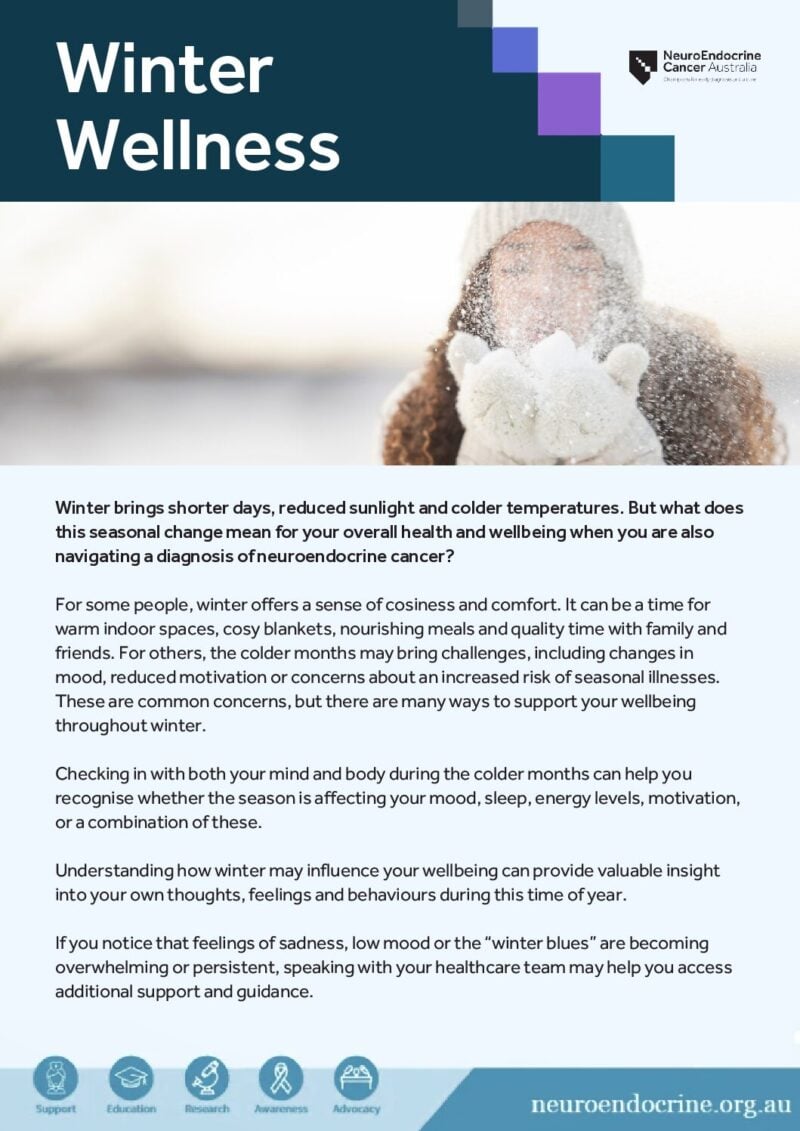
Winter brings shorter days, reduced sunlight and colder temperatures. But what does this seasonal change mean for your overall health and wellbeing when you are also navigating a diagnosis of neuroendocrine cancer?
For some people, winter offers a sense of cosiness and comfort. It can be a time for warm indoor spaces, cosy blankets, nourishing meals and quality time with family and friends. For others, the colder months may bring challenges, including changes in mood, reduced motivation or concerns about an increased risk of seasonal illnesses. These are common concerns, but there are many ways to support your wellbeing throughout winter.
Checking in with both your mind and body during the colder months can help you recognise whether the season is affecting your mood, sleep, energy levels, motivation, or a combination of these. Understanding how winter may influence your wellbeing can provide valuable insight into your own thoughts, feelings and behaviours during this time of year. If you notice that feelings of sadness, low mood or the “winter blues” are becoming overwhelming or persistent, speaking with your healthcare team may help you access additional support and guidance.
There are several practical strategies that can help support your physical and emotional wellbeing during winter.
1. Keep hydrated
During colder weather, dehydration can be less noticeable, yet it may still contribute to fatigue, headaches and difficulties with concentration. Aim to maintain consistent fluid intake throughout the day. If cold drinks are less appealing, consider room-temperature or warm water. Adding a slice of lemon can create a comforting and refreshing alternative.
2. Stay active
Maintaining regular physical activity during winter can support both physical and mental wellbeing. Exercise helps preserve strength and fitness and may assist your body in coping with seasonal illnesses. If possible, try incorporating a morning walk into your routine and invite a family member or friend to join you.
Exposure to fresh air and natural daylight after sunrise – even on cloudy days – can be beneficial. Remember to take appropriate precautions to protect your skin and eyes when spending time outdoors. y
3. Find the light
Reduced daylight exposure during winter can influence mood, sleep and alertness. Natural light plays an important role in regulating our circadian rhythms, which help govern our sleep-wake cycle, energy levels and emotional wellbeing. While accessing daylight can sometimes be challenging during winter, trying to spend time outdoors during daylight hours may help.
If you are considering additional, complementary support, such as light therapy, it is important to discuss this with your healthcare team or a qualified mental health professional.
4. Prioritise sleep
Maintaining a regular sleep-wake routine is especially important during winter. While it can be tempting to stay in bed longer on cold mornings, changes to your usual sleep schedule may affect sleep quality and daytime energy levels. Reviewing your sleep habits and practising good sleep hygiene can be helpful. If sleep difficulties persist, consider discussing them with your healthcare team.
5. Practice good hand hygiene
Winter often brings an increase in seasonal illnesses, including colds and influenza. Good hand hygiene remains one of the simplest and most effective ways to reduce the spread of infection. Wash your hands regularly, particularly before eating and after using the bathroom. These practices help protect not only your own health but also the wellbeing of those around you, including people with reduced immunity.
Seasonal changes can bring a wide range of emotions. Taking time to check in with yourself and recognising any concerns early can make a positive difference. Finding small ways to care for your physical and emotional wellbeing throughout winter can provide comfort and support – even when the weather is beyond our control.
