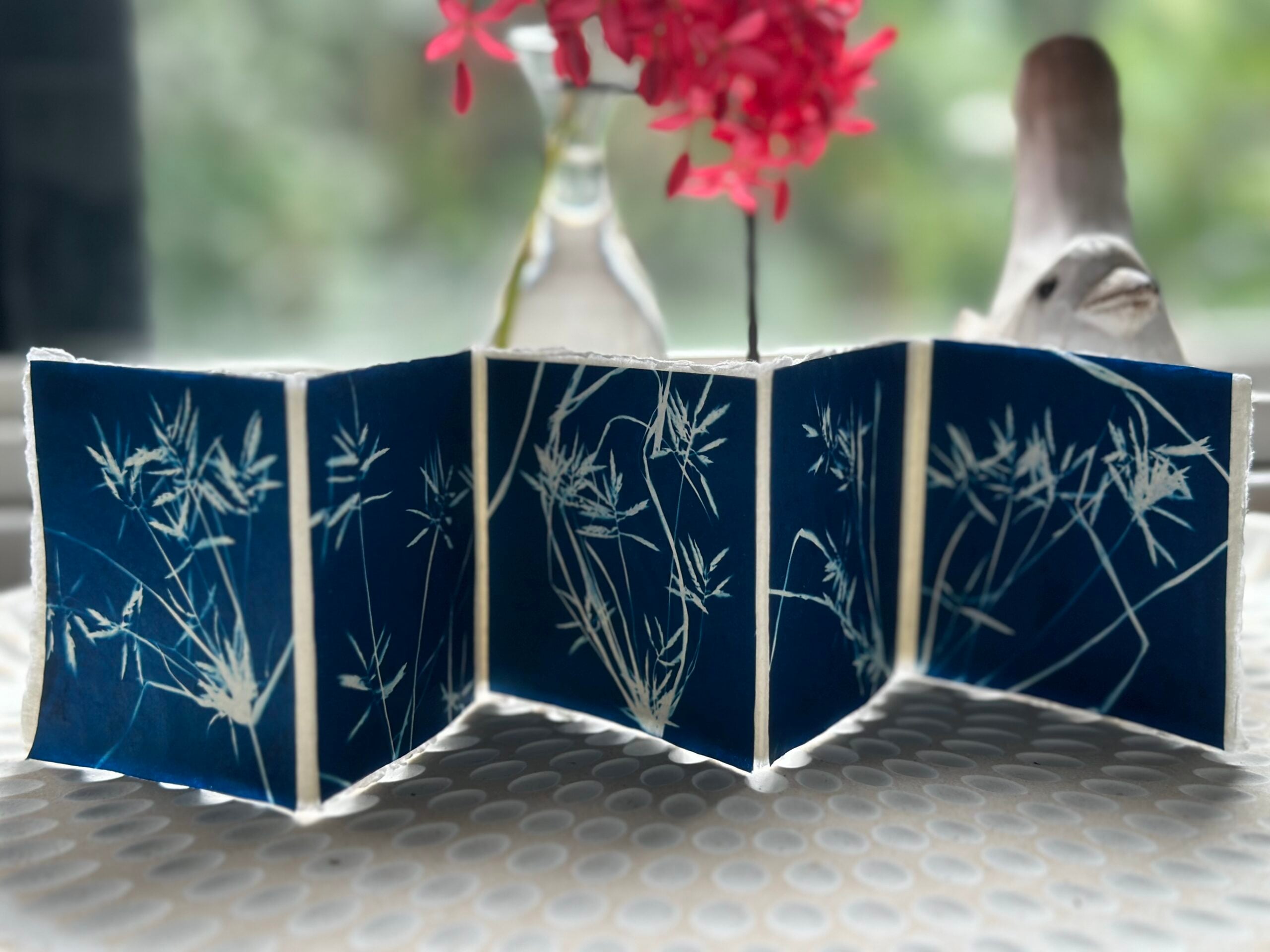
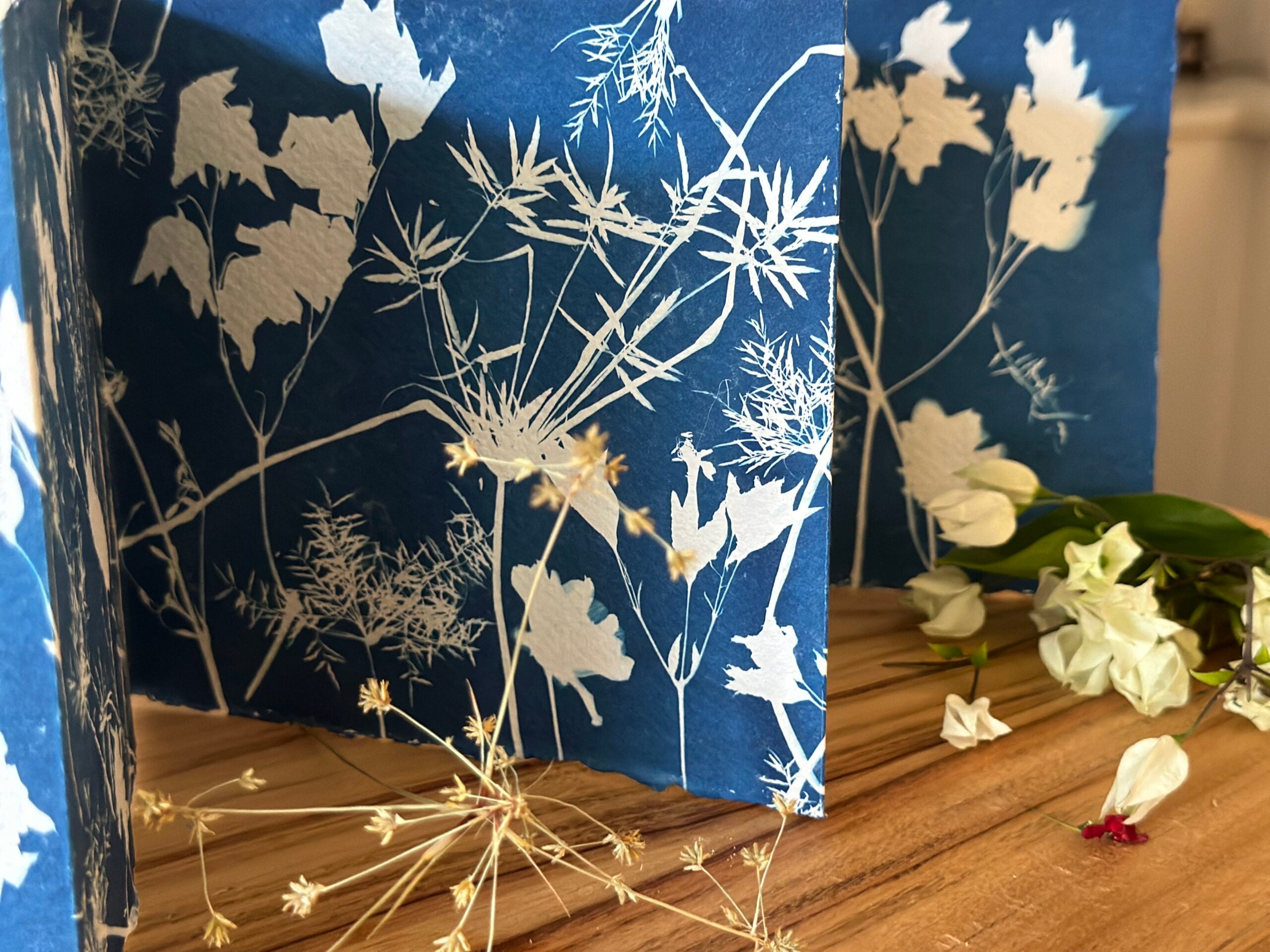
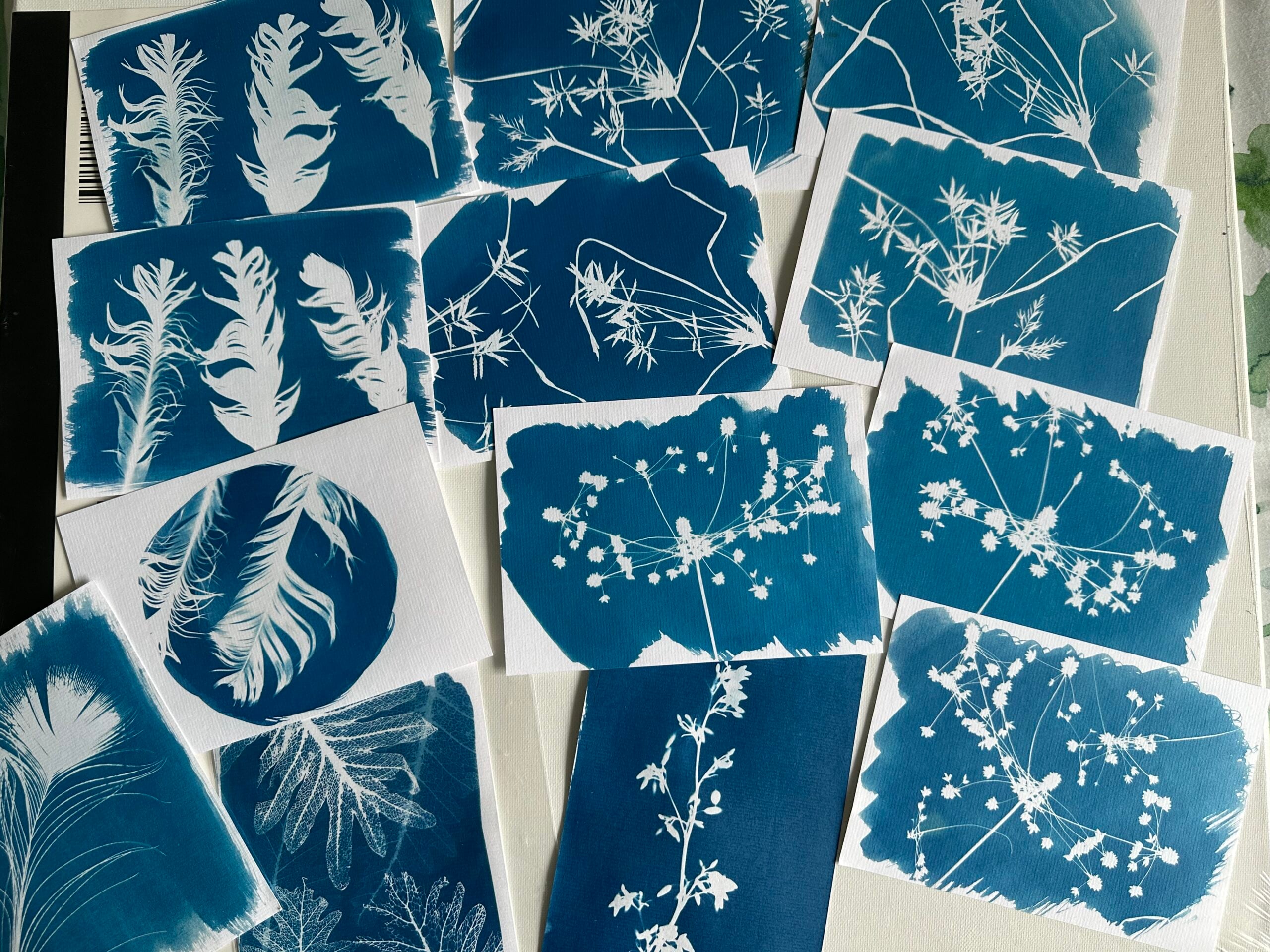
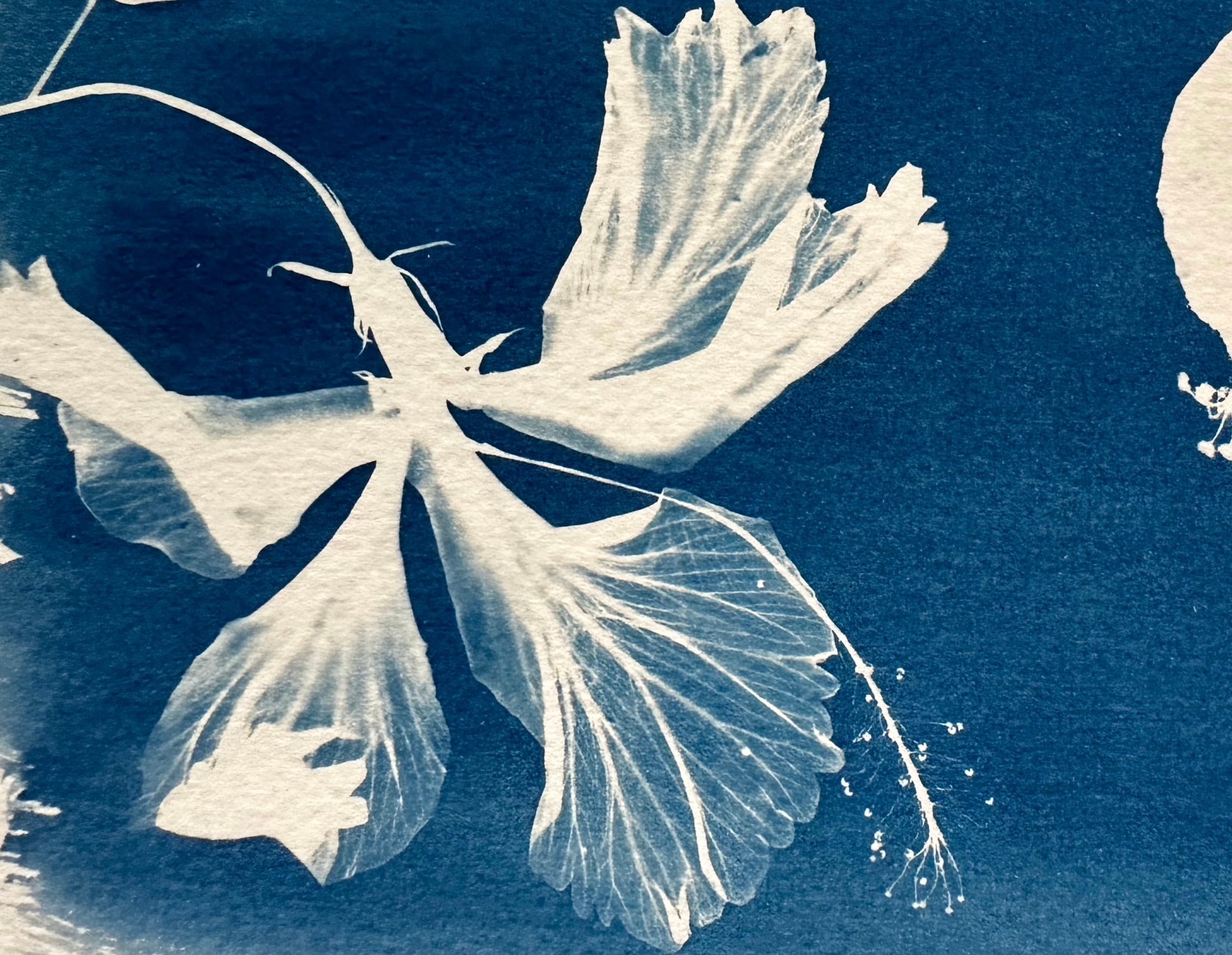
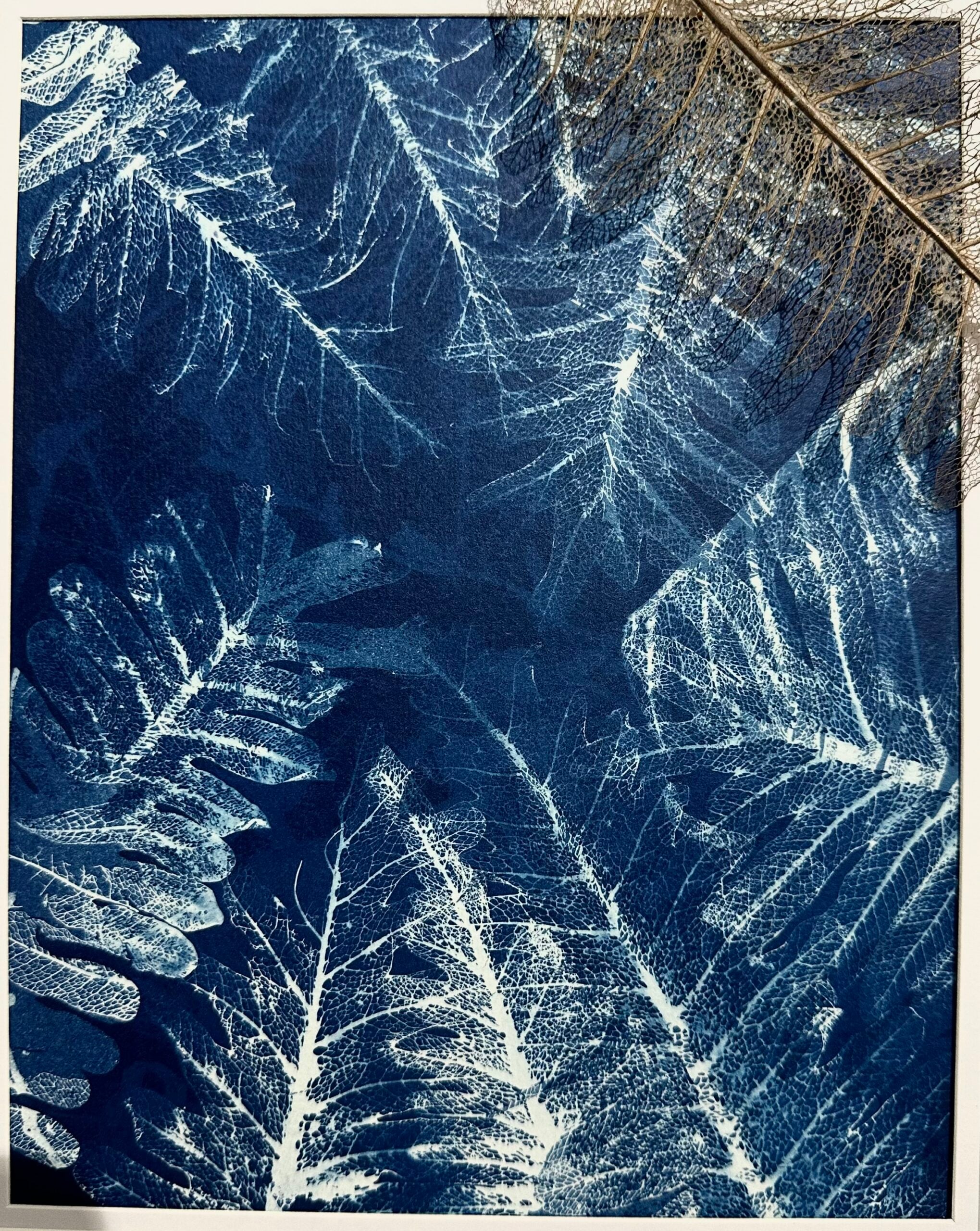
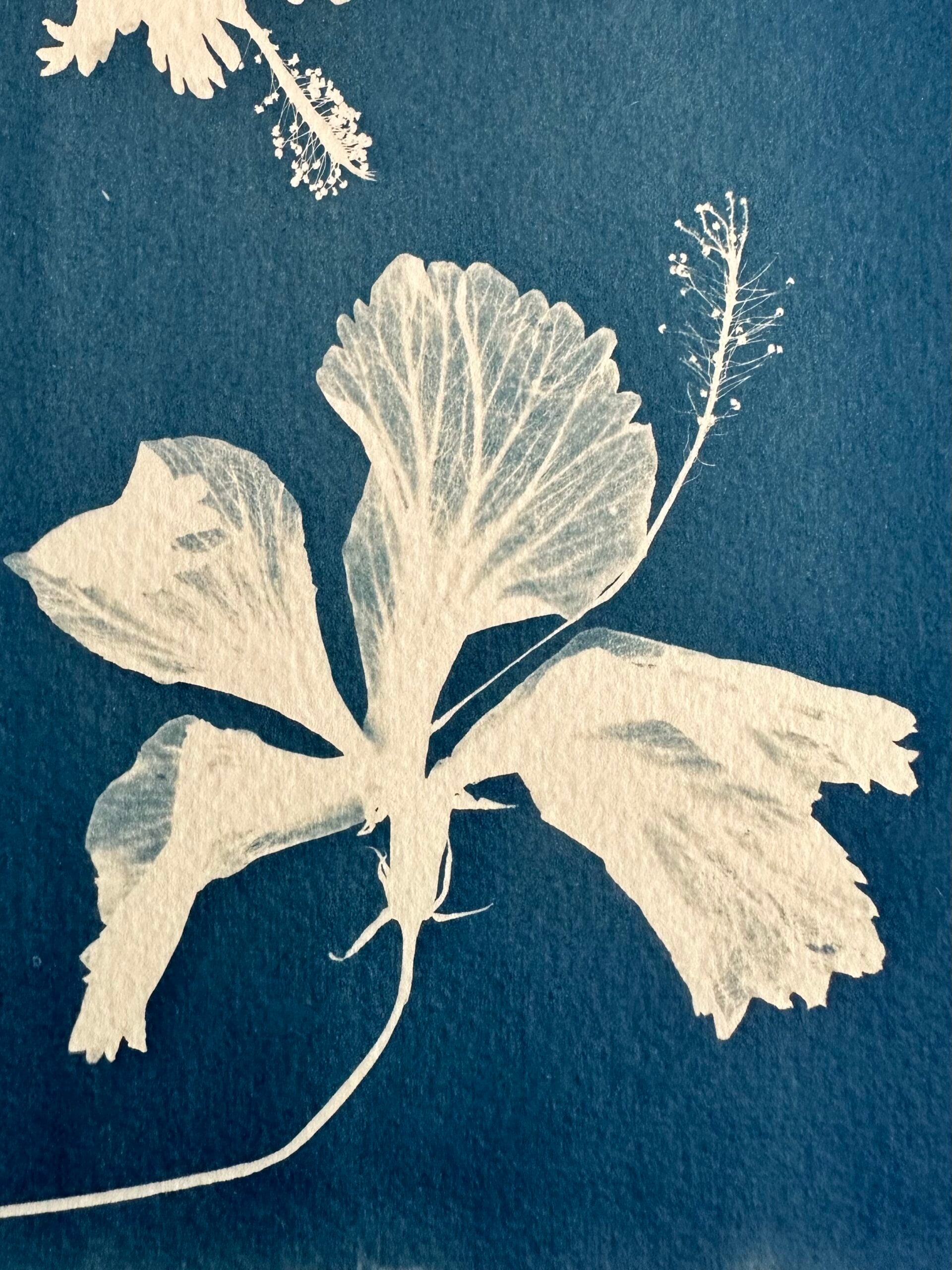
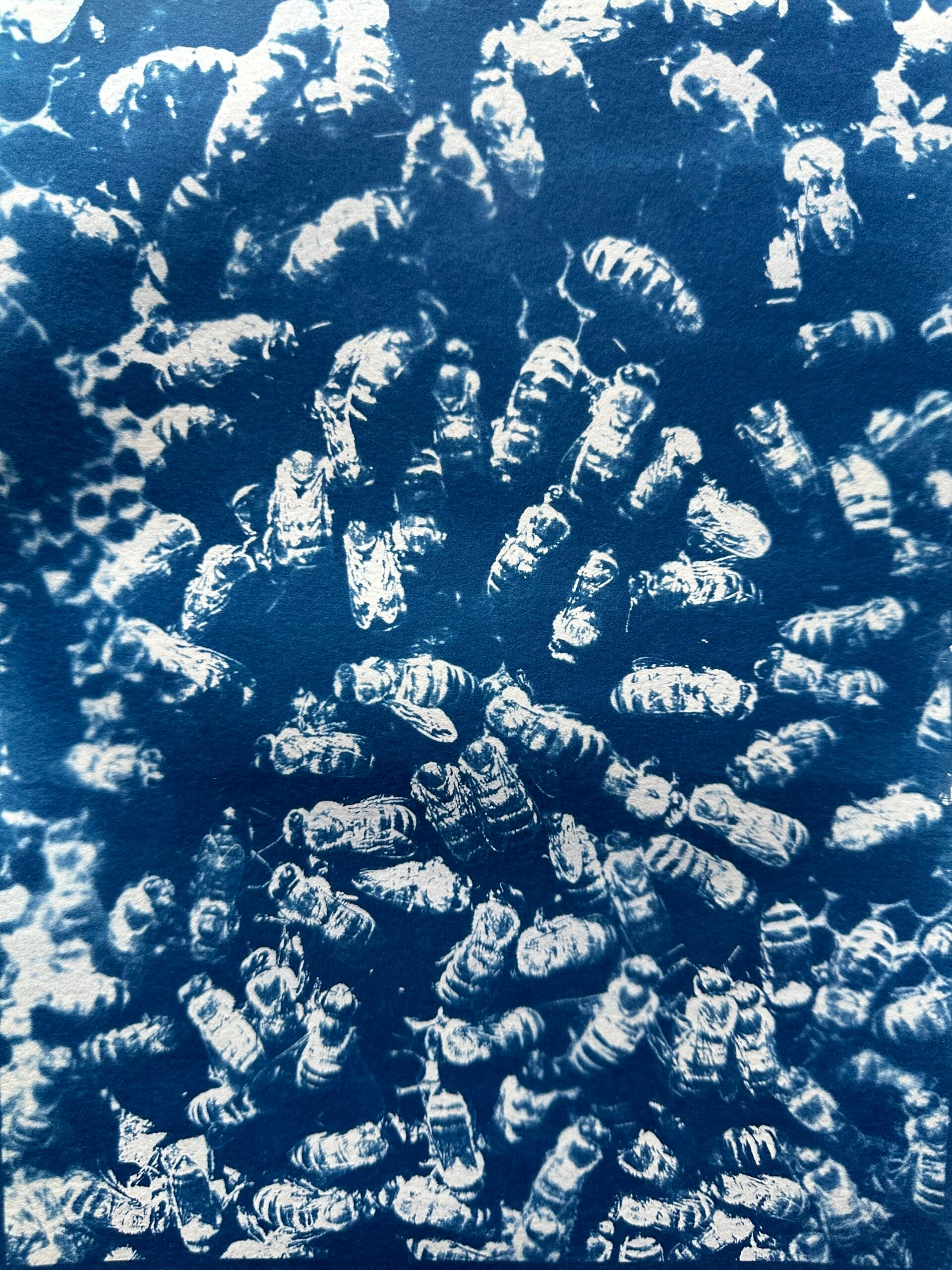
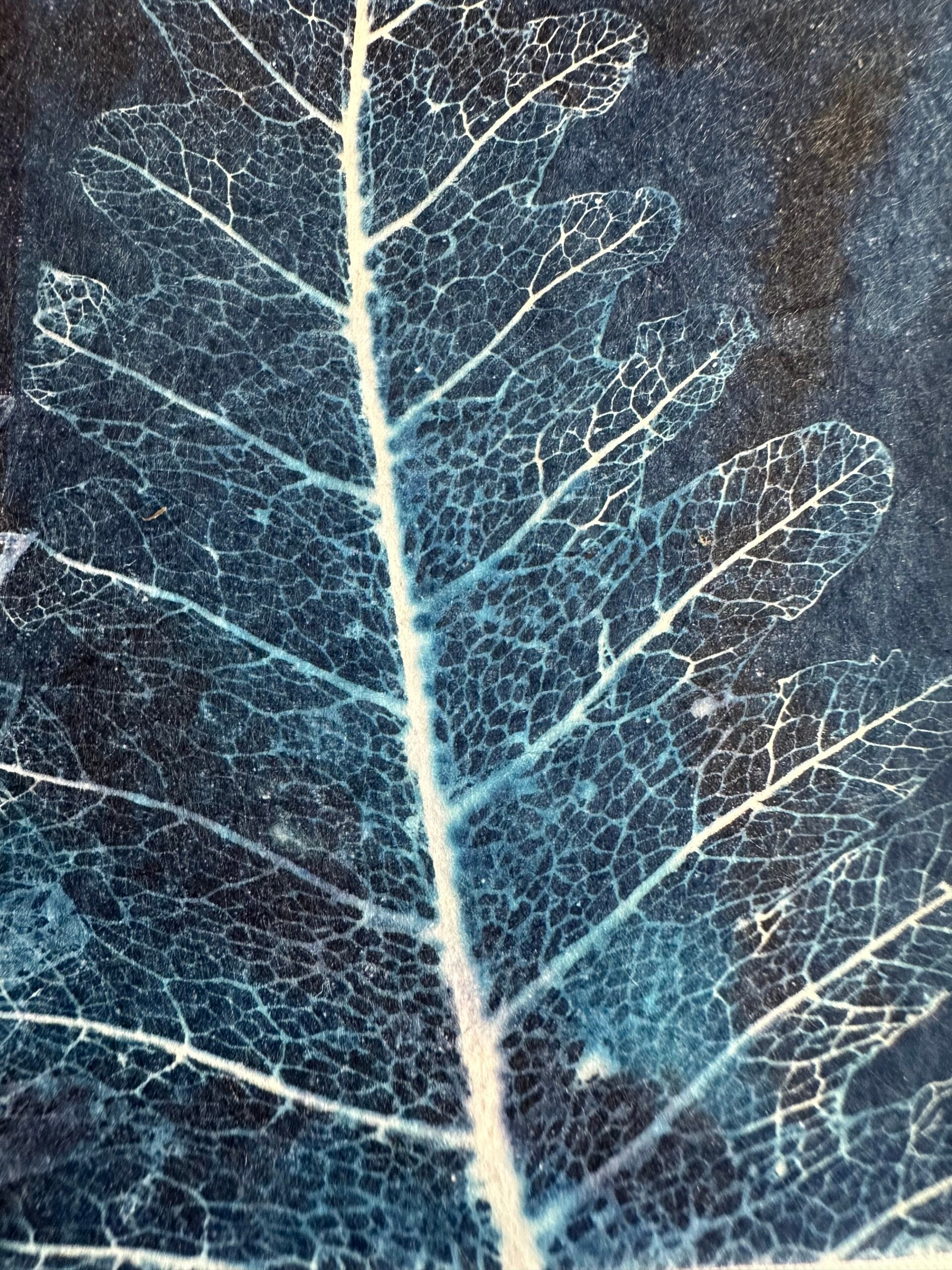
Cyanotype is a photographic printing process dating back to 1842, invented by Sir John Herschel. It is known for its distinctive Prussian blue hues. The process involves coating a surface with a light-sensitive solution, placing objects or negatives on it, and exposing it to ultraviolet light, resulting in a striking blue image.
I was aware of Cyanotype long before I had a chance to learn how to do it. That came in 2020 shortly after I abandoned my career due to nets! Cyanotype was invented to make copies of technical drawings but quickly extended to an art form which hooked me in from the moment I understood it. I cyanotype when I’m well enough to do so. It’s been such an important tool in maintaining normality and enjoying life whilst managing nets. Many of my cyanotype are made with botanicals, some with photographs taken back to negatives, feathers, glassware, so many things. It’s the perfect art form for me, allowing me to combine my love of nature and form with an alternative photographic process.