
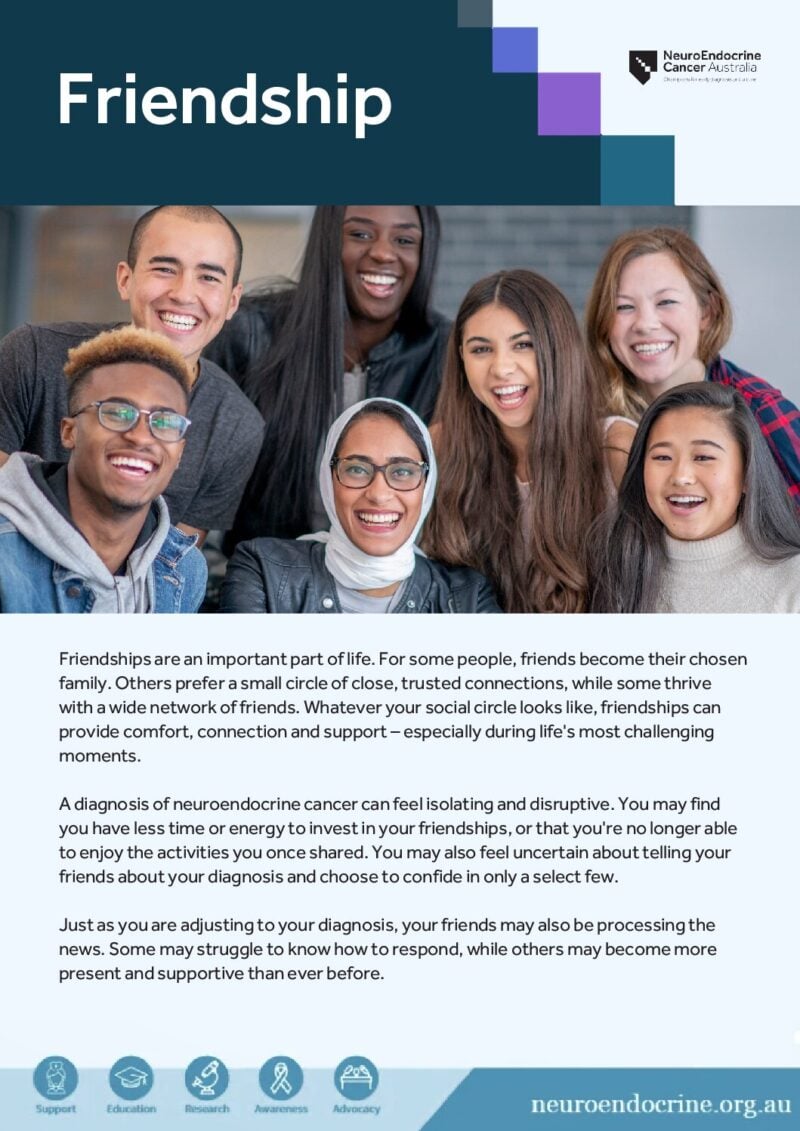
Friendships are an important part of life. For some people, friends become their chosen family. Others prefer a small circle of close, trusted connections, while some thrive with a wide network of friends. Whatever your social circle looks like, friendships can provide comfort, connection and support – especially during life’s most challenging moments.
A diagnosis of neuroendocrine cancer can feel isolating and disruptive. You may find you have less time or energy to invest in your friendships, or that you’re no longer able to enjoy the activities you once shared. You may also feel uncertain about telling your friends about your diagnosis and choose to confide in only a select few.
Just as you are adjusting to your diagnosis, your friends may also be processing the news. Some may struggle to know how to respond, while others may become more present and supportive than ever before.
Changes in friendships are a normal part of life, but they can feel especially significant following a cancer diagnosis. Taking time to consider both your own perspective and that of your friends can help build understanding, strengthen relationships and reduce misunderstandings. Remember that the people who care about you are usually doing their best to support you. While they may not always get it right, genuine friends rarely intend to cause further hurt.
If you choose to share your diagnosis, you may discover that some friends simply don’t know what to say. Their silence, although often unintentional, can feel painful when you are already navigating increased stress and uncertainty. Encouraging open, honest communication can help. Reassure your friends that they don’t need to have the perfect words – being present matters far more than saying the “right” thing.
Likewise, if you need time alone or your capacity changes, try to communicate your needs openly rather than expecting others to know how you’re feeling. Honest conversations help friends understand how they can best support you.
It’s also important to acknowledge that cancer affects many areas of life. Managing treatment, side effects, financial pressures, work, family responsibilities and relationships can feel overwhelming. Recognising these challenges together can foster compassion on both sides of the friendship.
How to support a friend living with neuroendocrine cancer
Be present.
Rather than worrying about saying or doing the wrong thing, simply show up. Illness can be lonely and frightening, and that isolation is often made worse when friends withdraw or stay silent. Your presence can provide reassurance, comfort and connection.
Offer practical help.
Instead of asking, “Let me know if you need anything,” try saying, “I’d like to help. I can pick up groceries this week,” or “I’ll drop off dinner on Thursday.” Specific offers remove the pressure of having to think of what to ask for. Everyday tasks such as shopping, cooking, driving to appointments or running errands can make a positive difference during treatment.
Organisations such as Gather my Crew offer free and practical ways to coordinate a ‘support crew’, which may help to make caring easier for everyone involved.
Listen without trying to fix.
Your friend is the expert in their own experience. Give them space to share their thoughts and feelings without immediately offering advice or solutions. Sometimes the greatest support is simply listening with empathy and respecting their choices, even if you would approach things differently.
Friendships provide a sense of belonging, connection and emotional support. They can reduce stress, strengthen resilience, build confidence and contribute positively to overall wellbeing. Research consistently shows that meaningful social relationships are among the strongest predictors of long-term health and quality of life.
Take a moment today to appreciate the friendships in your life. Whether you are living with neuroendocrine cancer or supporting someone who is, genuine friendship has the power to bring comfort, hope and strength through even the most difficult times.
