
Healthy boundaries when living with Neuroendocrine cancer
A diagnosis of neuroendocrine cancer may bring changes in energy levels, daily routine and emotional capacity. You may also find yourself processing new or complex information about your diagnosis and what it means for you. During this time of change and adjustment, finding ways to protect your emotional wellbeing can be a valuable part of coping and caring for yourself.
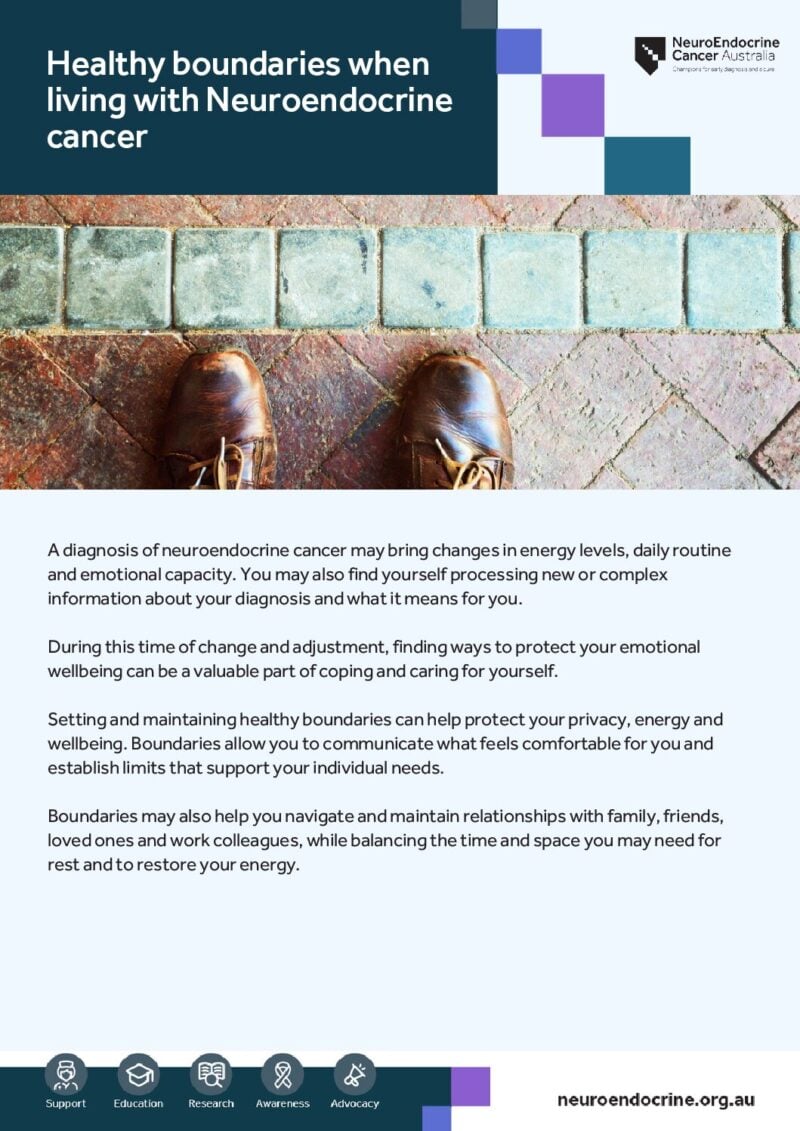
Setting and maintaining healthy boundaries can help protect your privacy, energy and wellbeing. Boundaries allow you to communicate what feels comfortable for you and establish limits that support your individual needs.
Boundaries may also help you navigate and maintain relationships with family, friends, loved ones and work colleagues, while balancing the time and space you may need for rest and to restore your energy.
Setting healthy boundaries is an act of self-respect.
It gives you permission to prioritise your needs without feeling that you must always meet the expectations of others. Healthy boundaries may help reduce stress and anxiety, prevent misunderstandings and foster relationships built on mutual respect, trust and understanding.
What do healthy boundaries look like?
Boundaries can be helpful in many situations and may change as your circumstances, needs and energy levels change. They can also relate to different aspects of your life, including:
- Physical boundaries: deciding what feels comfortable in terms of personal space, touch and physical contact.
- Emotional boundaries: recognising your emotional capacity and deciding when you feel able to discuss your diagnosis or have the capacity to offer support to others.
- Social boundaries: choosing when, how often and with whom you spend your time.
- Time and energy boundaries: allowing yourself time to rest, recover and prioritise activities that matter to you.
- Intellectual boundaries: deciding what information you feel comfortable sharing about your diagnosis, treatment and health, who you share it with, and how much detail you wish to provide.
- Spiritual boundaries: deciding what beliefs, practices or sources of meaning and support feel right for you.
- Healthy boundaries do not mean withdrawing from others or pushing people away. Rather, they allow you to maintain meaningful connections, while protecting your wellbeing and respecting your own needs.
How can you establish healthy boundaries?
Start by considering what you feel comfortable with and what you need to support your wellbeing. This may include reflecting on your energy levels, emotional capacity, privacy and the time you need for rest, appointments or activities that are important to you.
Communicating your needs clearly can help loved ones and others understand how best to support you. You do not need to provide lengthy explanations or justify every decision. Having a few phrases prepared in advance may make it easier to communicate your boundaries, particularly when you feel tired or overwhelmed.
For example, you might say:
- “Thank you for thinking of me. My doctor has advised me to limit my commitments this week, so I’ll need to say no for now.”
- “I appreciate your concern, but I’m not ready to talk about my results today.”
- “I’d love to see you, but I have limited energy at the moment. Could we arrange a shorter visit?”
- “Thank you for offering advice. At the moment, I need someone to listen rather than suggest solutions.”
Remember that you are allowed to change your mind as your needs change. What feels manageable one day may feel overwhelming the next. Aim to communicate your boundaries consistently where possible, while allowing yourself flexibility and compassion.
Protecting your energy and wellbeing
Healthy boundaries can be a valuable way to prioritise your time, energy and emotional wellbeing. Boundaries offer a practical means of staying connected with others while making space for rest, self-care, recovery and the things that matter most to you.
Living with neuroendocrine cancer can bring many changes, and your needs may evolve along the way. Remind yourself that your needs matter, and it is okay to protect the time, space and energy you need to care for yourself. Giving yourself permission to set healthy boundaries is one way to acknowledge those changes and respond to them with care.
