
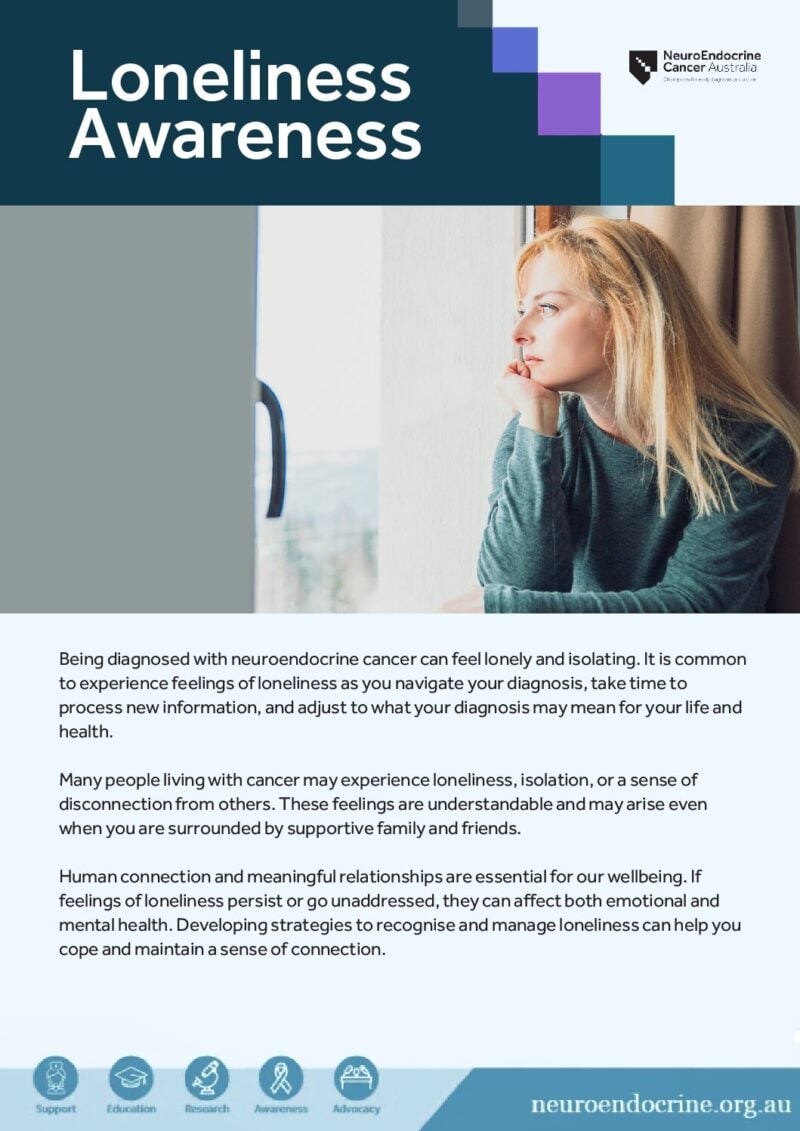
Being diagnosed with neuroendocrine cancer can feel lonely and isolating. It is common to experience feelings of loneliness as you navigate your diagnosis, take time to process new information, and adjust to what your diagnosis may mean for your life and health.
Many people living with cancer may experience loneliness, isolation, or a sense of disconnection from others. These feelings are understandable and may arise even when you are surrounded by supportive family and friends.
Human connection and meaningful relationships are essential for our wellbeing. If feelings of loneliness persist or go unaddressed, they can affect both emotional and mental health. Developing strategies to recognise and manage loneliness can help you cope and maintain a sense of connection.
Common signs of loneliness
- Feeling disconnected from others or believing that people do not understand what you are experiencing.
- Withdrawing from people or activities you previously enjoyed.
- Overthinking or believing that “no one cares” or that you are better off alone.
- Increased feelings of stress, worry or tension.
- Emotional exhaustion, low mood or a lack of motivation.
It is perfectly healthy to enjoy time alone. However, when occasional solitude becomes prolonged self-isolation, feelings of loneliness may intensify. Extended social isolation may be associated with an increased risk of anxiety, depression and unhelpful or intrusive thoughts.
Practical strategies to stay connected
- Reach out to someone you trust
Loneliness affects many people at different stages of life. Taking the first step to reconnect can make a difference.
- Reconnect with existing friends or family
Suggest a time and place that works for you. Starting the conversation is often the hardest part.
- Try something new
Join a class, hobby or activity, and invite a friend or loved one to come along.
- Build on your current interests
Invite someone to join you for a yoga class, art group, coffee or a walk in nature.
- Spend time with your pet
Walking your dog or simply getting outdoors can improve your wellbeing and create opportunities for conversation with others.
- Explore your local community
Community groups, sporting clubs, libraries, museums, creative spaces and local events can all provide opportunities to meet new people and connect with your community.
- Connect through shared values
Cultural groups or volunteering can help foster a sense of belonging and purpose.
As you begin taking small, proactive steps towards connection, you create opportunities for new experiences, relationships and friendships to develop over time. Remember that many others are also seeking meaningful connection, and even one small step can make a positive difference.
For further information and inspiration, visit Loneliness Awareness Week.
Most importantly, remember that you are not alone.
