
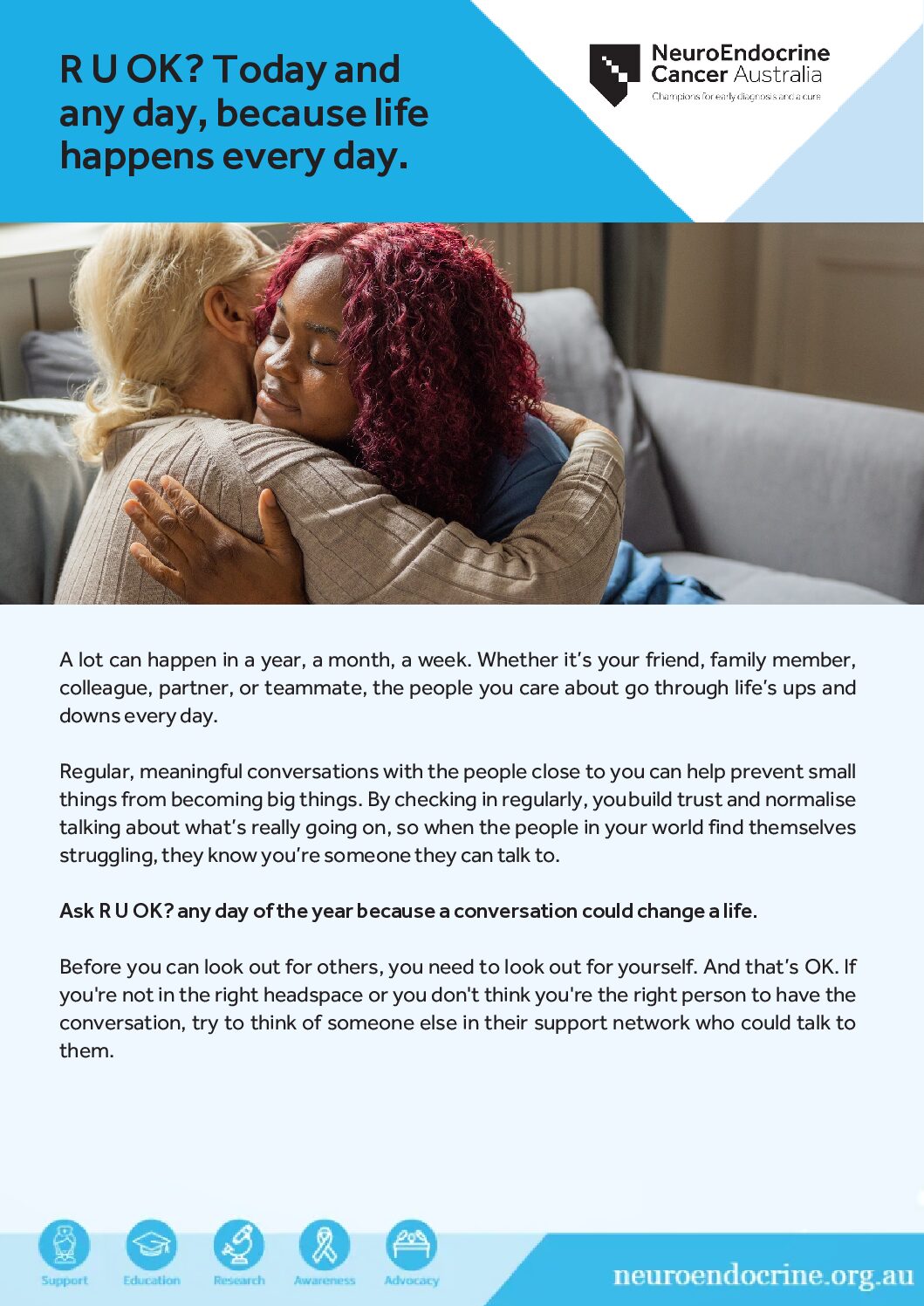
A lot can happen in a year, a month, a week. Whether it’s your friend, family member, colleague, partner, or teammate, the people you care about go through life’s ups and downs every day.
Regular, meaningful conversations with the people close to you can help prevent small things from becoming big things. By checking in regularly, you build trust and normalise talking about what’s really going on, so when the people in your world find themselves struggling, they know you’re someone they can talk to.
Ask RU OK? any day of the year because a conversation could change a life.
Before you can look out for others, you need to look out for yourself. And that’s OK. If you’re not in the right headspace or you don’t think you’re the right person to have the conversation, try to think of someone else in their support network who could talk to them.
To help you decide whether you’re ready to start a meaningful conversation, ask yourself:
- Am I ready?
- Am I in a good headspace?
- Am I willing to genuinely listen?
- Can I give as much time as needed?
- Am I prepared?
- Do I understand I cannot ‘fix’ someone’s problems?
- Do I accept they may not be willing to talk to me?
- Have I picked my moment?
- Have I chosen somewhere private and comfortable?
1. Ask RU OK?
- Be relaxed, friendly and concerned in your approach.
- Help them to open up by asking questions like “How are you going?” or “What’s been happening?”
- Mention specific things that have made you concerned for them, like “You seem less chatty than usual, how are you going?”
2. Listen
- Take what they say seriously and don’t interrupt or rush the conversation.
- Don’t judge their experiences or reactions but acknowledge that things seem tough for them.
- If they need time to think, sit patiently with the silence.
- Encourage them to explain: “How are you feeling about that?” or “How long have you felt that way?”
- Show that you’ve listened by repeating back what you’ve heard (in your own words) and ask if you have understood them properly.
3. Encourage Action
Ask:
- “What have you done in the past to manage similar situations?”
- “How would you like me to support you?”
- “What’s something you can do for yourself right now? Something that’s
enjoyable or relaxing?”
You could say:
“When I was going through a difficult time, I tried this… You might find it useful too.”
If they’ve been feeling really down for more than 2 weeks, encourage them to see a health professional. You could say, “It might be useful to link in with someone who can support you. I’m happy to assist you to find the right person to talk to.”
Be positive about the role of professionals in getting through tough times.
If they need help:
Some conversations are too big for family and friends to take on alone. If someone’s been very low for more than 2 weeks – or is at risk – please contact a professional as soon as you can.
4. Check-in
Pop a reminder in your diary to call them in a couple of weeks. If they’re really struggling, follow up with them sooner.
You could say:
“I’ve been thinking of you and wanted to know how you’ve been going since we last chatted.”
Ask if they’ve found a better way to manage the situation. If they haven’t done anything, don’t judge them. They might just need someone to listen to them for the moment.
Stay in touch and be there for them. Genuine care and concern can make a real difference.
