
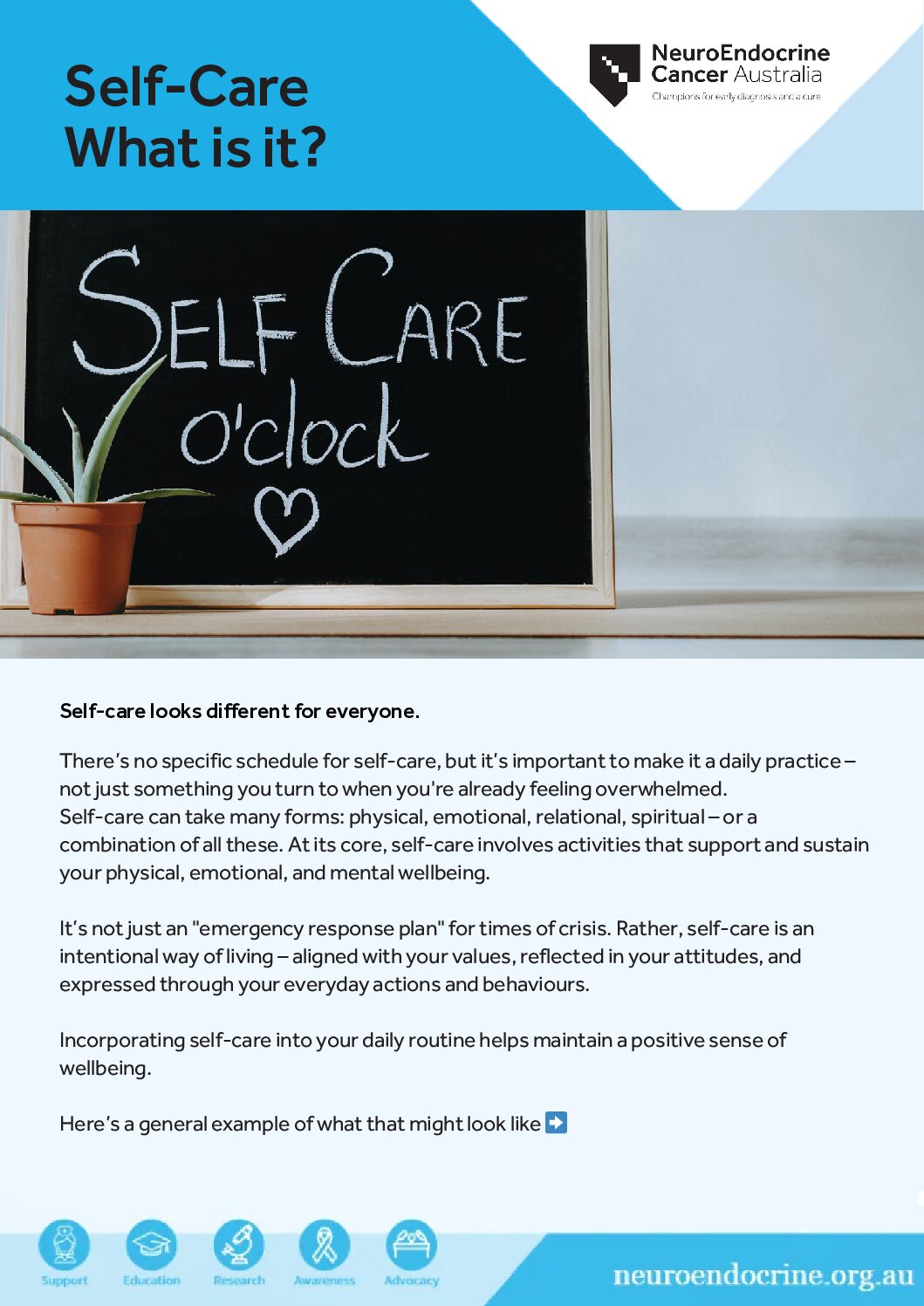
There’s no specific schedule for self-care, but it’s important to make it a daily practice – not just something you turn to when you’re already feeling overwhelmed. Self-care can take many forms: physical, emotional, relational, spiritual – or a combination of all these. At its core, self-care involves activities that support and sustain your physical, emotional, and mental wellbeing.
It’s not just an “emergency response plan” for times of crisis. Rather, self-care is an intentional way of living – aligned with your values, reflected in your attitudes, and expressed through your everyday actions and behaviours.
Incorporating self-care into your daily routine helps maintain a positive sense of wellbeing.
Here’s a general example of what that might look like:
Physical Self-Care
This includes any positive action you take to care for your body and its needs – like getting enough sleep, eating nourishing foods, staying active, and attending medical check-ups.
Relational self-care
This focuses on building and maintaining healthy relationships with significant others, family, and close friends. Strong, supportive relationships require time and energy – but they also remind us we don’t have to carry life’s burdens alone.
Emotional Self-Care
Emotional self-care involves activities that help you process your feelings and nurture your mental health. This might include journaling, setting boundaries, practicing mindfulness, or seeking support when needed.
Spiritual self-care
Nurture your inner life and help you connect with a deeper sense of meaning. This might involve prayer, meditation, spending time in nature, or engaging with your faith or belief system – whatever helps you feel a sense of awe or connection with something greater than yourself.
Looking after your mental health is a deeply personal journey, but there are universal practices that can help keep it in check. Research and lived experience both point to meaningful strategies that support mental wellbeing and make self-care achievable, sustainable and effective.
Practical strategies for self-care
1. Engage in purposeful and enjoyable activities
Activities that bring joy, provide a sense of achievement, and help us focus on our own personal goals are vital to wellbeing. These moments create balance and fulfillment in our lives. Purpose doesn’t always need to be grand – what matters is that it feels meaningful to you.
2. Practice healthy thinking
Negative thoughts are a natural part of life. The goal isn’t to eliminate them, but to build a daily habit of healthy thinking – observing, questioning, and challenging our thoughts. Think of it as putting a negative thought “on trial”: Is it a fact, or is it just a moment, which will pass?
It’s also important not to fall into toxic positivity. Acknowledging discomfort or negative emotions keeps us grounded and helps us respond authentically. Over time, healthy thinking helps us decide which thoughts are worth acting on, and which can simply be let go.
3. Build a supportive daily routine
Our brains thrive on patterns and predictability. A steady daily routine offers a sense of control and stability, which becomes especially valuable during stressful times. A cornerstone of this is sleep – arguably the foundation of all self-care. Prioritise sleep hygiene by waking up at the same time each day, regardless of how the night went. It might be challenging at first, but persistence leads to results. Consistency in our routines – eating well, moving regularly, and setting daily intentions – helps us better handle the unexpected
4. Maintain social connections
Connection is essential to emotional resilience. Whether it’s through hobbies, family, spiritual practices, physical activity, or even spending time with pets, meaningful interactions remind us that we’re not alone. Pets offer unconditional companionship – and sometimes just simply a warm cuddle from a furry friend.
5. Reframe self-care as a responsibility
Self-care is not selfish – it’s necessary. Seeing it as both a personal and professional responsibility can help dissolve guilt or hesitation. Taking time to recharge helps us show up more fully for ourselves and others.
6. Develop self-awareness
Tune into your emotions and behaviours. Notice when things start to feel overwhelming or when physical symptoms of stress appear – our bodies often signal first what our minds overlook
7. Create a self-soothing toolkit
Make a list of comforting or distracting activities you enjoy – music, movement, crafting, walking, deep breathing. Keep it somewhere visible, so it’s ready when you need it most.
8. Use your support network
Identify the people you can talk to and lean on them regularly. Don’t wait for others to check in – initiate honest conversations. Ask others how they’re doing and answer authentically when they ask you.
9. Set boundaries
Protect your energy with intentional boundaries. Consider where possible “no cancer talk” time or “non-appointment” days. Pair this time with activities that nourish you – especially ones that get you moving, outside, or around people who lift you up.
10. Seek guidance if you’re unsure
If you’re not sure where to begin, talk to someone you trust or reach out to a professional. Selfcare doesn’t have to be figured out alone.
