
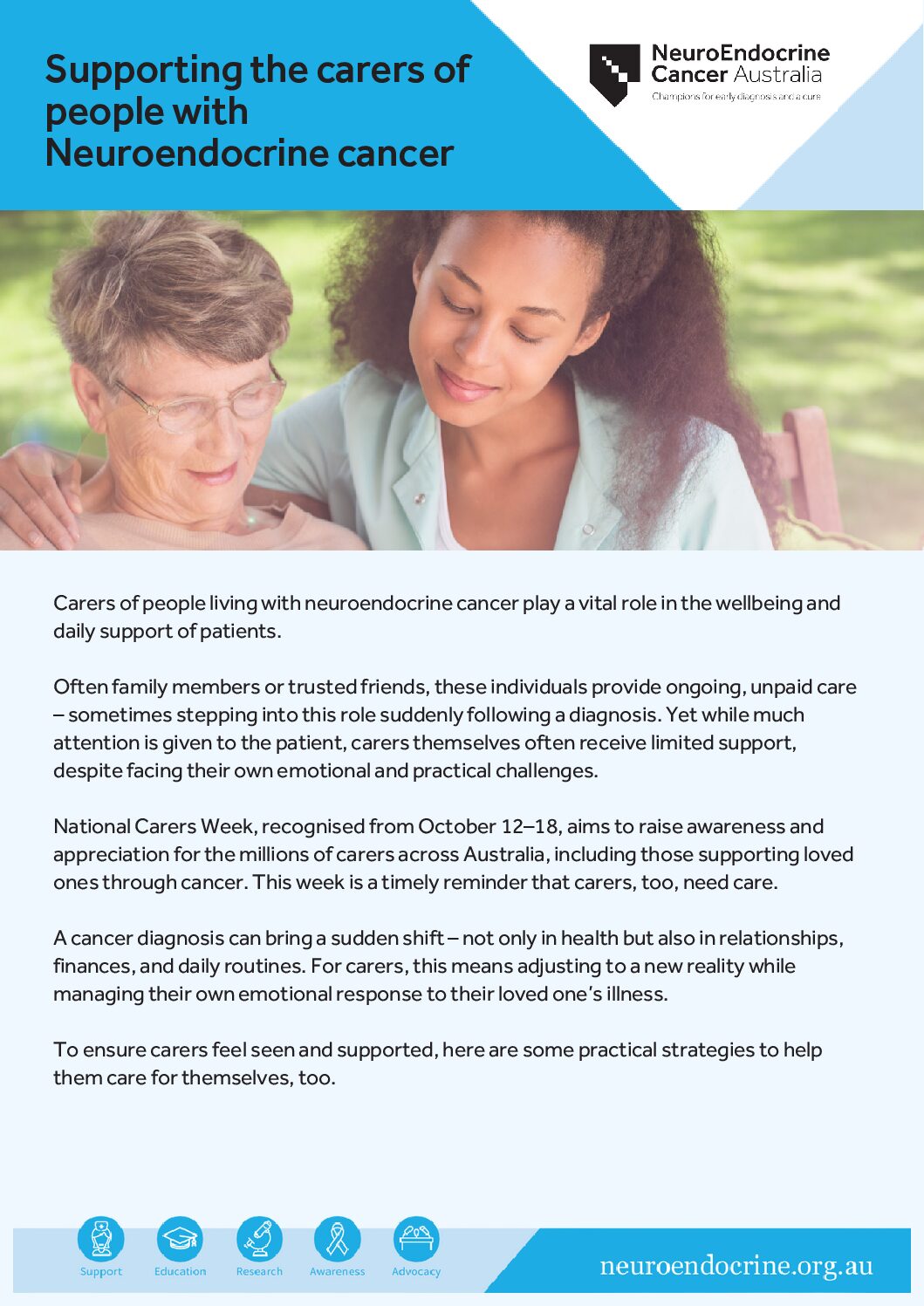
Carers of people living with neuroendocrine cancer play a vital role in the wellbeing and daily support of patients.
Often family members or trusted friends, these individuals provide ongoing, unpaid care – sometimes stepping into this role suddenly following a diagnosis. Yet while much attention is given to the patient, carers themselves often receive limited support, despite facing their own emotional and practical challenges.
National Carers Week, recognised from October 12–18, aims to raise awareness and appreciation for the millions of carers across Australia, including those supporting loved ones through cancer. This week is a timely reminder that carers, too, need care.
A cancer diagnosis can bring a sudden shift – not only in health but also in relationships, finances, and daily routines. For carers, this means adjusting to a new reality while managing their own emotional response to their loved one’s illness.
To ensure carers feel seen and supported, here are some practical strategies to help them care for themselves, too.
Practical strategies to help carers to care for themselves
1. Acknowledge the role of a carer
Carers may not always identify themselves as such, especially if they feel their support is “not about obligation, it is about the deep care for my loved one”. Recognising and naming the role is an important first step. Open conversations with trusted friends, family members, or professionals can help validate their experience and create space for support.
2. Start the support conversation
Carers often push their own needs aside out of guilt, fear of judgment, or a belief that they must “stay strong.” This can lead to burnout or emotional exhaustion. Gently initiating a conversation and asking, “How can I support you?” can make a big difference. Many cancer support organisations also offer dedicated resources for carers.
3. Offer practical help and a break
Acts of support don’t have to be grand. Offering to run errands, drop off a meal, do laundry, or take the carer out for a coffee can provide much-needed relief. These gestures not only support the carer but also benefit the patient by lightening the emotional and physical load.
Organisations such as Gather my Crew offer free and practical ways to coordinate a ‘support crew’, which may help to make caring easier for everyone involved.
4. Recognise and appreciate their efforts
Carers often feel and want to know how they can help their loved one – acknowledgement that they are helping by caring can provide positive reinforcement of their role.
5. Encourage regular self-care
Carers need reminders that self-care is not selfish – it’s essential. Encourage small, achievable self-care activities like a short walk, listening to music, watching a movie, or simply taking five minutes to breathe. Apps offering mindfulness or meditation can provide quick, accessible support during a busy day.
6. Check in regularly and respectfully
A regular check-in can help carers feel less isolated – but timing and setting matter. Sensitive topics should be discussed privately, not in front of the patient. Carers may hesitate to share their feelings out of love or a desire not to burden the person they’re caring for. Offering a listening ear, free from judgment, can be deeply comforting.
7. Ask for help – and accept it
If you’re a carer, know your limits. Delegating tasks or accepting help isn’t a sign of weakness – it’s a strength. Often, people want to help but simply don’t know how. Be honest and specific about what you need and lean into your support network. Community can be a lifeline.
8. Practice acceptance and self-compassion
It’s natural to wish for certainty or control, but cancer brings unpredictability. Learning to sit with discomfort and uncertainty can ease the emotional toll. Everyone makes mistakes or has difficult days – what matters most is moving forward with compassion and patience.
9. Balance paid work and caring
If you’re juggling employment with your caring role, consider speaking with your employer about flexible work options or leave entitlements. You’re not required to disclose your caregiving responsibilities, but opening the conversation may ease the pressure and lead to better understanding and accommodations.
10. Know your rights and resources
You don’t have to navigate this journey alone. In Australia, organisations like Services Australia, the Carer Gateway, We Can Cancer Supportive Care and the National Carers Week website offer resources, financial information, and emotional support tailored for carers.
Carers are a crucial part of Australia’s healthcare system, and their dedication often goes unseen. Caring for someone with cancer is a deeply personal journey – one filled with love, challenges, and profound moments of connection. Ensuring carers receive the recognition and support they deserve makes this path less lonely and more sustainable.
To all the carers: thank you. You are not alone.
