
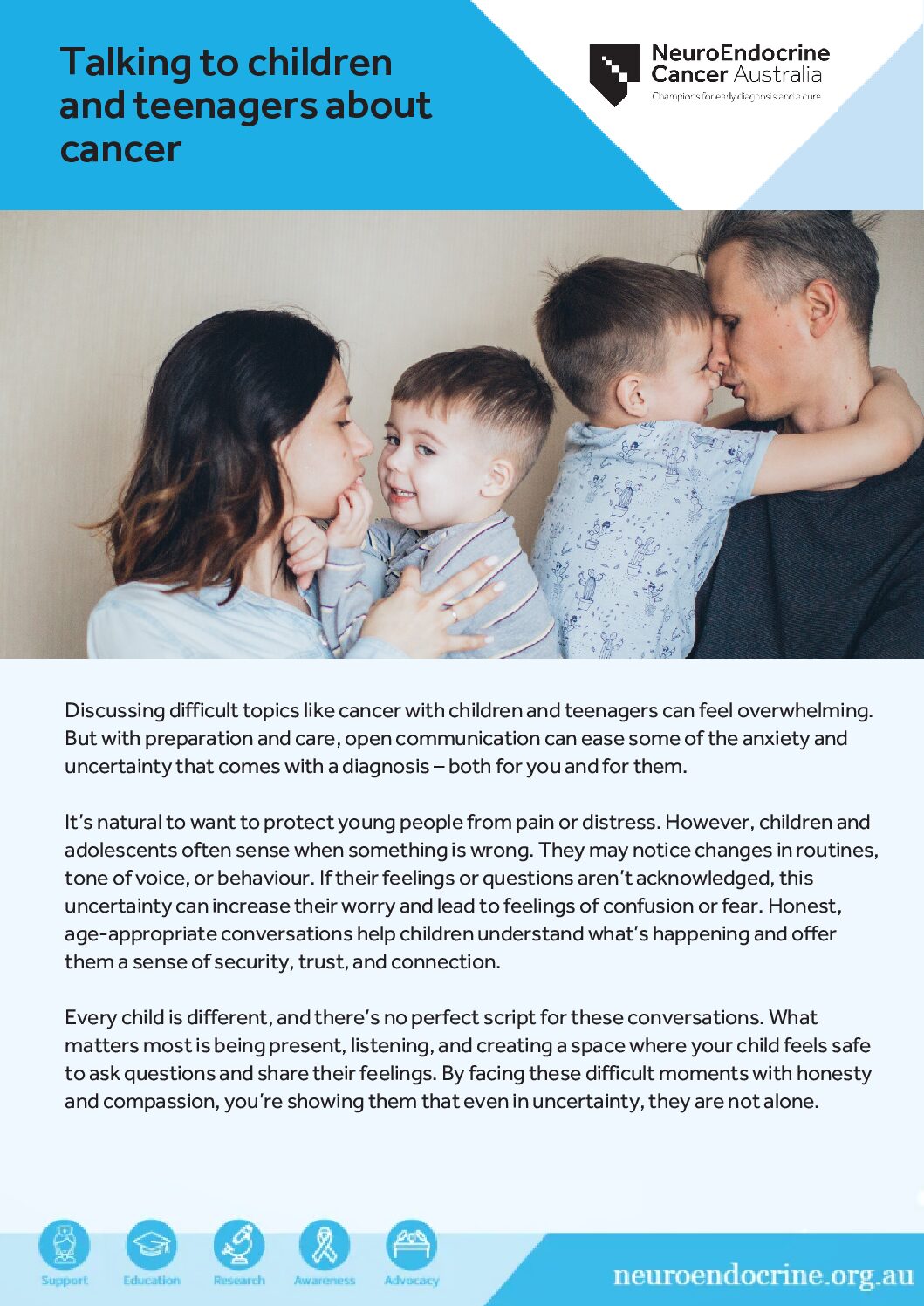
Discussing difficult topics like cancer with children and teenagers can feel overwhelming. But with preparation and care, open communication can ease some of the anxiety and uncertainty that comes with a diagnosis – both for you and for them.
It’s natural to want to protect young people from pain or distress. However, children and adolescents often sense when something is wrong. They may notice changes in routines, tone of voice, or behaviour. If their feelings or questions aren’t acknowledged, this uncertainty can increase their worry and lead to feelings of confusion or fear. Honest, age-appropriate conversations help children understand what’s happening and offer them a sense of security, trust, and connection.
Every child is different, and there’s no perfect script for these conversations. What matters most is being present, listening, and creating a space where your child feels safe to ask questions and share their feelings. By facing these difficult moments with honesty and compassion, you’re showing them that even in uncertainty, they are not alone.
Why talking helps
Open and supportive communication offers many benefits:
1. It reduces fear
Knowing what’s going on helps children feel less anxious and less confused.
2. It creates space for questions
Children can express their feelings and thoughts, which helps them make sense of what’s happening.
3. It builds trust
Talking openly shows children they can rely on you for honest answers, even about hard topics.
4. It avoids harmful assumptions
If children overhear adult conversations or sense secrecy, they may instead imagine worst-case scenarios or feel excluded.
5. It prevents misplaced guilt
Some children may think they caused a loved one’s illness. Clear communication helps to correct any misunderstandings.
6. It reinforces their role in the family
Being included in conversations shows children they are valued and respected.
7. It supports teens’ emotional needs
Older children may not want to burden an ill loved one with their feelings, so ensuring they have other trusted adults – such as teachers, school counsellors, or extended family – can be important.
Modifying conversations to age
The way you talk about cancer will depend on your child’s age, maturity, and personality. Keep things simple and honest and try to use words they may hear in conversation, such as cancer, treatment, or medicine. Here are some age-appropriate strategies:
Young children (under 8)
Use simple, concrete explanations. Play, drawings, picture books, and stuffed animals can help make difficult concepts more understandable.
Example: “Cancer doesn’t always hurt, but if I have pain, my doctors will give me medicine to help me feel better.”
Children (8–12)
Children at this age can begin to understand more complex ideas. They may ask detailed questions, and it’s important to be honest, even if you don’t have all the answers.
Example: “Some days might be harder for me than others, but I’ll always let you know how I’m feeling.”
Teenagers
Teens may want more detailed information and may do their own research. They might also talk less and hide their emotions. Encourage open dialogue, non-verbal ways to communicate and provide space for them to process things in their own time.
Example: “Treatment might make me feel sick or tired, but I have a medical team helping me. If you ever want to talk or ask questions, I’m here – and it’s okay if you don’t want to talk right away, too.”
Supporting children through the experience
Some general strategies can help children and teens feel more supported:
- Stick to familiar routines as much as possible – it helps create a sense of normality and stability.
- Encourage physical activity, play, and time with friends. These are essential outlets for coping.
- Reassure them they didn’t cause the illness – and that cancer isn’t contagious.
- Check in regularly. For older children and teenagers, tools like emotion scales or mood charts can help them express how they’re feeling without needing to find the right words.
- Watch for non-verbal signs of distress, such as changes in sleep, appetite, mood, behaviour, or school performance.
- Maintain boundaries and rules. Structure offers comfort, even during unpredictable times.
- Give older children appropriate responsibilities but keep things in balance so they don’t feel overwhelmed.
- Prioritise quality time. Carve out family moments and one-on-one time, especially with activities your child enjoys.
- Seek professional help when needed. Psychologists, counsellors, social workers, and school support services can offer valuable tools and reassurance – for both children and adults.
