
What is uncertainty?
Uncertainty is a common and often ongoing concern for people living with cancer, as well as for their families and support networks. It can arise at any point in the cancer journey—before a diagnosis, during treatment, or even after recovery.
You might face uncertainty about scan results, the possibility of recurrence, side effects of treatment, or the future of your health, relationships, career, and overall well-being.
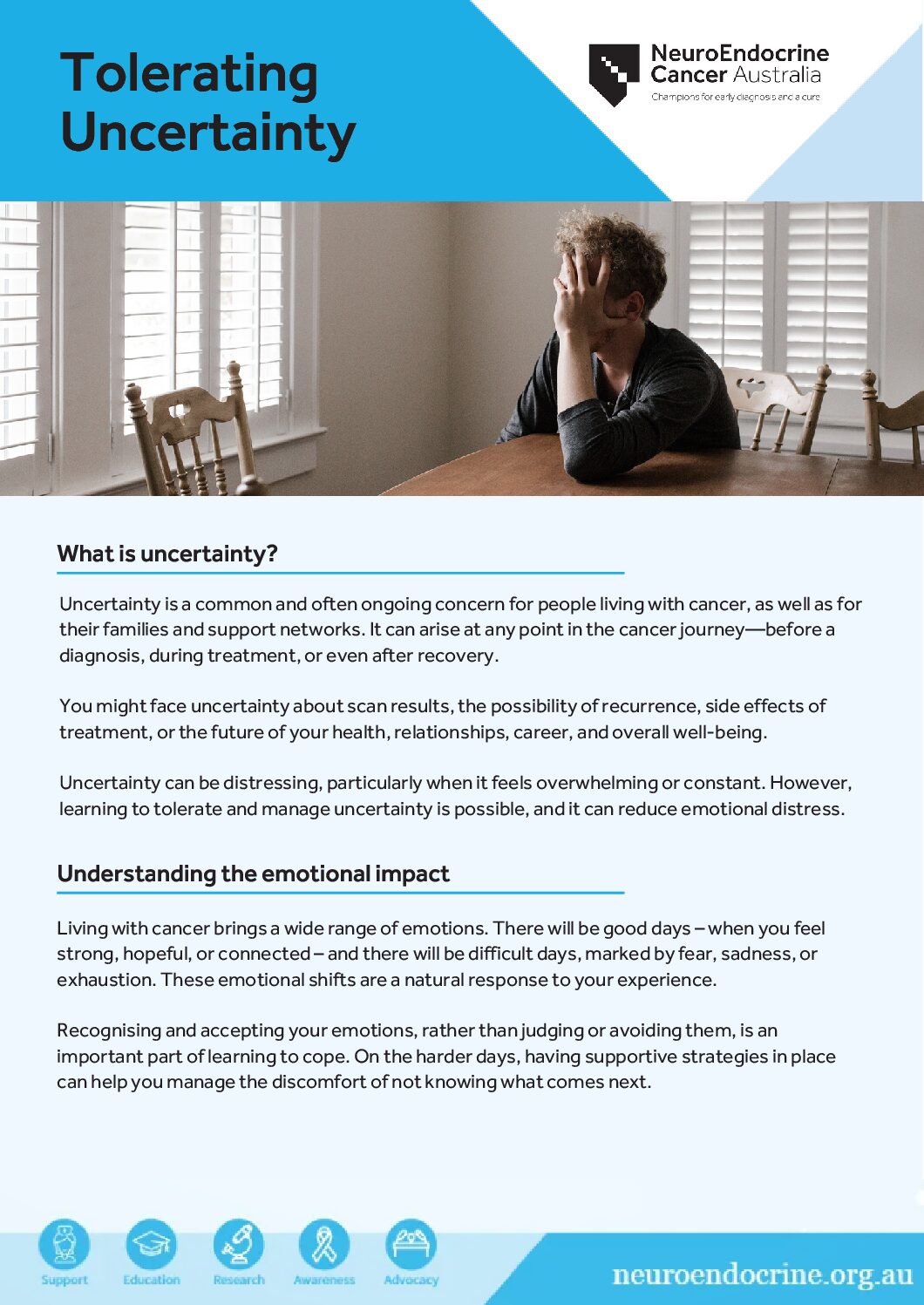
Uncertainty can be distressing, particularly when it feels overwhelming or constant. However, learning to tolerate and manage uncertainty is possible, and it can reduce emotional distress.
Understanding the emotional impact
Living with cancer brings a wide range of emotions. There will be good days – when you feel strong, hopeful, or connected – and there will be difficult days, marked by fear, sadness, or exhaustion. These emotional shifts are a natural response to your experience.
Recognising and accepting your emotions, rather than judging or avoiding them, is an important part of learning to cope. On the harder days, having supportive strategies in place can help you manage the discomfort of not knowing what comes next.
Supportive strategies to consider
Each person copes differently with uncertainty. The key is to identify what helps you feel more grounded, even in times of unpredictability. Here are some practical strategies to consider and explore:
1. Express your thoughts and emotions
Writing down your thoughts, feelings, and fears can help you process what you’re going through. Journaling doesn’t need to be polished or daily – just honest.
Try noting:
- Positive reflections: “Today I felt more energetic and spent time outside.”
- Difficult moments: “I had trouble sleeping and felt anxious in the morning.”
- Next steps: “I’ll make a list of questions for my next appointment.”
Putting your feelings into words can offer relief, provide clarity, and help prepare for conversations with loved ones or your care team.
2. Engage in creative expression
If writing isn’t your preferred outlet, explore other creative avenues. Drawing, painting, music, gardening, photography or crafting can help release emotions in a nonverbal and often soothing way. Creativity can also provide a sense of purpose and joy, even in small doses.
3. Self soothe
Soothing activities can calm your nervous system and bring moments of peace. This might include:
- Drinking a warm cup of tea
- Wrapping yourself in a soft blanket
- Listening to calming music
- Sitting in your favourite chair
- Taking a warm bath
These comforting actions are intended as temporary relief from uncertainty. They may make the experience more bearable in the moment.
4. Use distraction mindfully
Sometimes, giving your mind a break from worry is helpful. Choose enjoyable or engaging distractions such as:
- Spending time with a pet or loved one
- Watching a movie or reading a book
- Listening to a podcast or music
- Engaging in a hobby or light exercise
Distraction can be a healthy, temporary coping tool – but be mindful not to use it to avoid your feelings altogether. Balance it with time for reflection or emotional expression.
Seeking additional support
If you find uncertainty is consistently overwhelming or interfering with your daily life, consider speaking with a counsellor, psychologist, or other mental health professional. They can help you:
- Develop personalised coping strategies
- Learn problem-solving skills
- Work through specific anxieties or fears
Joining a support group or connecting with others who understand what you’re going through can also provide validation and comfort.
Tolerating uncertainty doesn’t mean liking it or pretending it doesn’t affect you. It means learning how to live with the reality of the unknown, while still finding ways to care for yourself and engage with life. Some days will be harder than others – but with the right support and tools, you can navigate those days with greater resilience and self-compassion.
