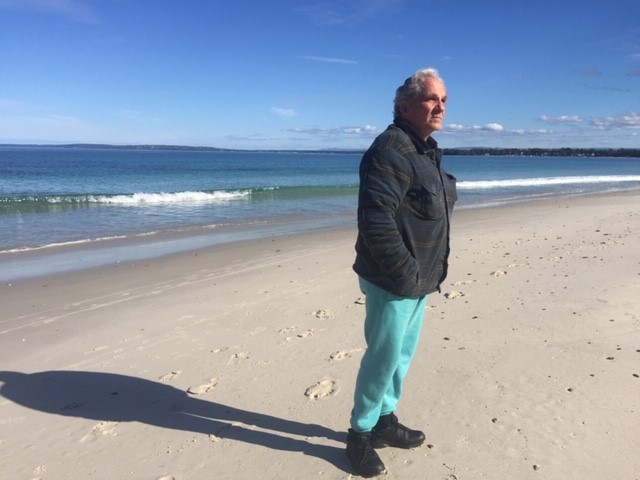
My name is Bob and I am a proud Wiradjuri man from Central New South Wales. My connection to Country and culture has always been an important part of who I am, grounding me through life’s challenges and joys. Recently, I’ve faced one of my greatest challenges: being diagnosed with neuroendocrine cancer (NETs).
Having a family history of cancer, both mother and father, my own diagnosis of NETs probably shouldn’t have taken me by surprise but it did.
Increasing pain in the abdomen, hospital emergency visits and vague references to diverticulitis, IBS, bowel blockage and other diagnoses never seemed to really fit my symptoms.
Fast forward to May 2020 and my local doctor recommended CT scans and a follow up Gallium 68 PET scan. This showed a sizeable carcinoid tumour on the lining of the mesentery. Gastroscopy and biopsy, colonoscopy and biopsy aided to the diagnosis of NETs.
NETs are cunning. Primary sites for cancer can often be hard to locate but in my case after removal of a large portion of small bowel and a bowel resection, the primary site seemed to be in the GI tract.
Further scans revealed that my NETs had metastisised to my liver , which seems fairly common from GI NETs , and 3 months later I underwent a left hepatectomy of the liver to remove that tumour also.
This was not the end of the story and although the missing part of my liver has regrown, which in itself is amazing, in August this year further PET-CT scans have shown a recurrence of tumours in the original site and a new, smaller tumour on the right lung.
The news however is positive. Most NETs are usually slow growing and I am on a regime of Sandostatin (Octreotide ), which at last blood pathology showed a decrease in the levels of serotonin output from the tumours. This is an indicator that tumour stabilisation may be occurring.
Noticeably I am the first NETs patient my local GP has seen and I downloaded some great information from the NeuroEndocrine Cancer Australia site and he was thankful to receive it. NETs is classified as a less common cancer and I would strongly advocate for medical practitioners and newly diagnosed patients to learn as much as possible towards its treatment.
I am extremely fortunate and thankful for the multidisciplinary team from the Shoalhaven Cancer Care Centre working on my case and the support by the NETs nurse and Neuroendocrine Cancer Australia. There is a lot of support now for NETs patients, that wasn’t available in the past, and can be found on the NECA website. Wishing all current NETs patients and carers the best wishes for their journeys.