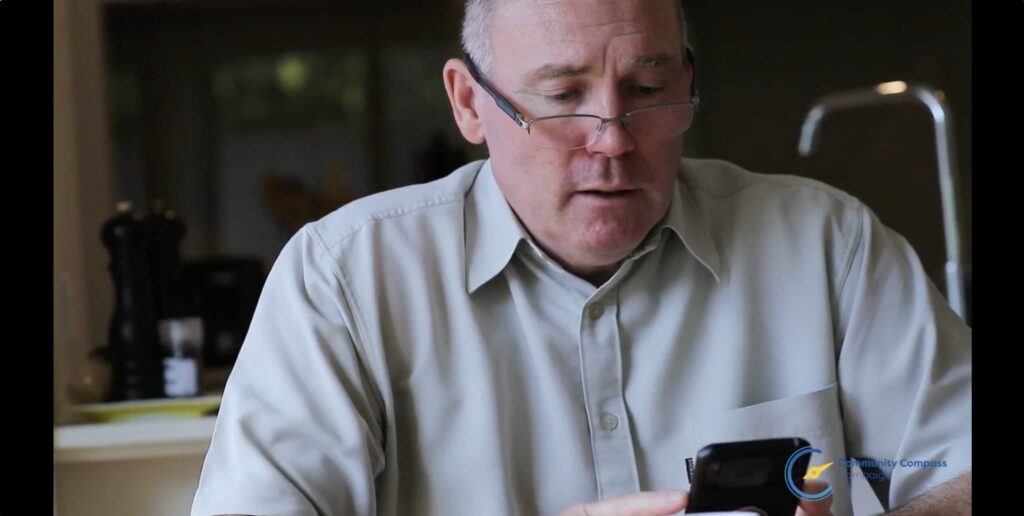
Brad, diagnosed with neuroendocrine cancer.
Brad shares his journey with neuroendocrine cancer, explaining that some symptoms he had been exhibiting since 2009, were signs of cancer. Initially misdiagnosed due to symptoms resembling a heart condition, the NET tumour was discovered during an unrelated investigation.
“Fortunately for me,” Brad explains, “we found the metastasised cancer to the liver when the primary cancer in my bowel caused a bowel obstruction.”
Reflecting on his experience, he emphasizes the importance of not ignoring symptoms, as early detection could have altered his situation significantly.
“You need to pay a bit of attention to your body,” he advises.
Brad candidly discusses his struggle with the lack of control over his condition, noting,
“Everybody’s cancer behaves differently, so you’re never quite sure whether it is going to pop up somewhere else.”
He highlights the importance of holistic health, both physically and mentally, and shares the value of seeking counseling to understand mortality and manage stress. He advises newly diagnosed patients to connect with Neuroendocrine Cancer Australia (NECA) for immediate support and resources, stressing,
“Getting the right information and educating those that don’t (know) should be priority one.”
Brad also talks about his treatment routine, where he receives injections every 28 days, and the adaptability it requires, such as his wife being trained to administer the injections providing more flexibility in their lives.
He appreciates the support from the Neuroendocrine Cancer community, including practical advice and emotional support through the NECA Facebook groups. By sharing his story, Brad hopes to provide guidance and support to others facing similar challenges, emphasising the importance of community and understanding in coping with cancer.