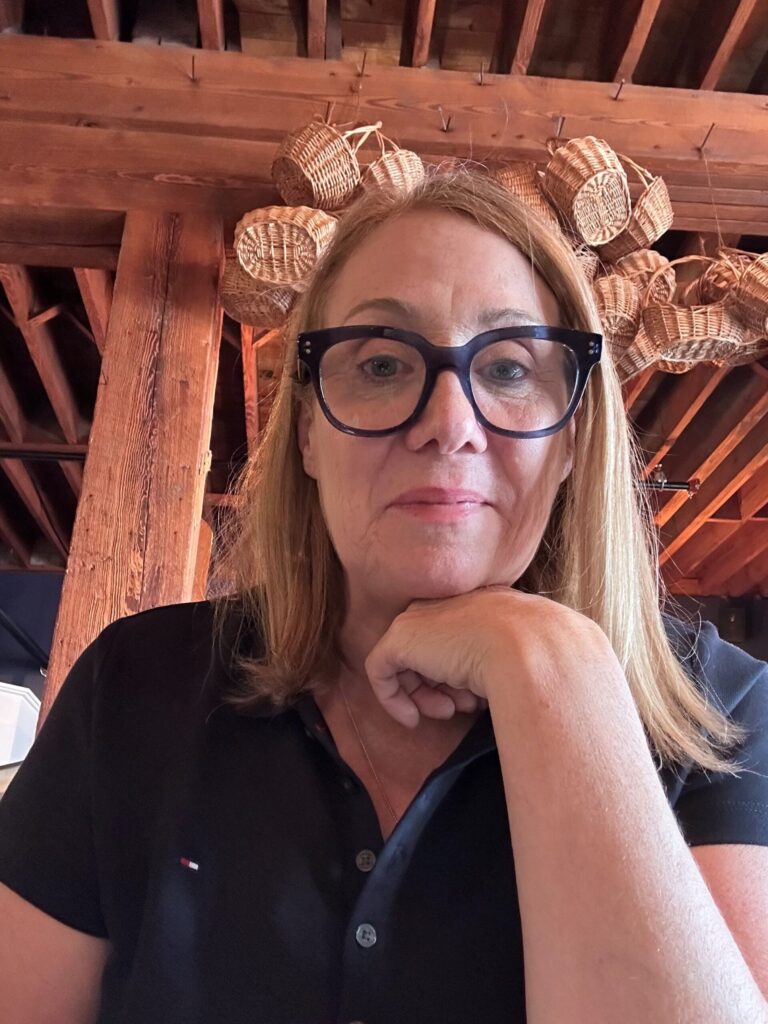
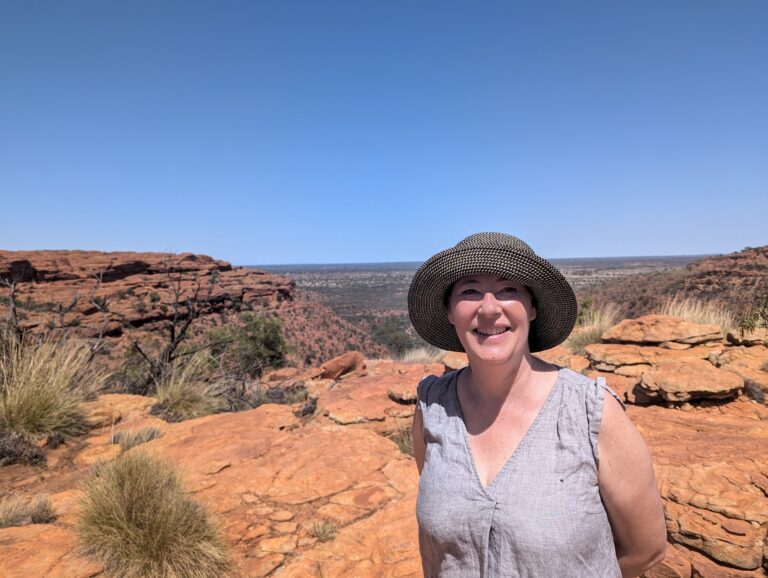
I am an internationally award-winning food book author and small Indie publisher living in Tasmania. I am also a former BBC national radio researcher and producer and have a Master of Counselling degree from Notre Dame University in Fremantle, Western Australia.
I was diagnosed with neuro endocrine pancreatic cancer (PNET) in December 2024 for which I had major surgery in January 2025. Then unfortunately, it was confirmed in a PET scan in January 2026 that the cancer had metastasized, found in a lymph node.
This has been my experience and the lessons I’ve learned in my neuroendocrine journey so far …
Lesson one – know thy body!
It wasn’t a shock when I was first diagnosed with a tumour on my pancreas in December 2024. I almost laughed out loud, in fact! “Well, that explains so much, I thought!”. I didn’t cry as I thought I might either at such traumatic news. I felt wryly vindicated in a strange way! As Spike Milligan quotes on his tombstone: “I told you I was sick”! How many scans had I been refused by the various GP’s I’d seen over the past few years – too numerous to recall. If only the doctors had taken heed, if only I had advocated for myself harder, but alas this seems to be a common occurrence in neuroendocrine cancers which are apparently notoriously difficult to diagnose.
The reason I mention “Know thy body” is that not a year prior I had nonchalantly advised my husband as we were heading out for dinner that I was dying. He rolled his eyes. I laughed. In his defence, I confess, I can be a bit of a drama queen, but somehow, I knew in the depths of my soul that something was seriously wrong. That something had been missed, that something was killing me! And no one believed me.
Lesson two – trust your intuition!
The diagnosis made me realise that we know our bodies better than anyone else and that we need to trust our instincts when we know that something isn’t right where our own bodies are concerned.
We need to listen to our bodies, trust our intuition, advocate for ourselves, and push for tests and scans when we know something is wrong. For if we don’t take the initiative, who else will?!
The truth is, hadn’t I pushed for and insisted on having a scan last in December 2024 and agreed to pay for it privately, I would not be here now, cancer free!
The Sydney surgeon who removed the first tumour told me that the cancer due to its size (10 x 5 cm+) had probably been growing for 10+ years! For at least half of that time, and for the past three years prior to the diagnosis especially, I had been experiencing an increasing catalogue of uncomfortable symptoms impacting a variety of systems in my body (predominantly my digestive system, hormonal, heart and sleep), as well as the symptoms negatively impacting my wellbeing generally – I felt tired all the time and generally below par!
Friends rolled their eyes and teased me for being a hypochondriac, when I complained about symptoms and a lack of energy. And honestly at one point I began to think I was too, but the reality was that I was nursing a huge tumour that was consuming me in gradual increments! So NO, you aren’t being a hypochondriac, if you feel that something isn’t right trust your instincts and get it investigated!
Lesson three – ask for what you want and need from your GP, they are there to help YOU, not to help finance the drug companies!
Multiple doctors had turned down my requests over the years for an abdominal scan. Instead, I was simply given an increasing number of drugs to treat the catalogue of symptoms that I was experiencing, thereby masking the cause of the symptoms.
I think women are particularly susceptible to this response from GP’s, especially older women, particularly from male GP’s (from my and many of my female friends’ experience). Women become somehow invisible I think as we age, every symptom put down to the menopause, or some form of neurosis!
Having said that, I appreciate that this cancer is notoriously difficult to diagnosis as symptoms can be so varied and vague, and also mild at first if the cancer is a low grade cancer like mine, but when symptoms persist, become more urgent, more intense, cease to disperse, and when we feel more and more generally unwell, we need to listen to our bodies and act – to insist we get the tests we need (and to pay for them if needed). It could save your life, as it did mine!
BUT, back to the diagnosis!
Lesson four – absorbing the news.
Once the bad news had been conveyed – that I had a 10 cm x 5 cm+ cancerous tumour on my pancreas and spleen, strangely at first, I didn’t feel sorry for myself at all. Ever the pragmatist my first thought was “people are diagnosed with cancer everyday – why not me!”. Also, I was aware that one in four of us will develop some form of cancer in our lifetime.
But then I thought about the two friends I’d lost to pancreatic cancer and a veil of white noise descended followed by what I can only describe as an ‘out of body experience’. Suddenly the doctor’s words sounded incoherent, muffled, floating untethered in the ether!
White noise descended too the next day when sitting in the Tasmanian surgeon’s office, the surgeon’s sombre face staring at me with not a flicker of hope in his eyes! Sentences like:” the tumour is inoperable, we’ll try chemotherapy first to see if we can shrink the tumour BUT there are no guarantees of success and even then, surgery may not be possible so we may have to consider … blah, blah, blah, blah … “Indecipherable dislocated words that at the time may as well have been in a foreign language!
By the end of that day, I had mentally updated my WILL and organised my entire funeral, white scented flowers and epitaph included!
Frankly being diagnosed with pancreatic cancer was ALOT! Especially having lost two good friends to the disease (aged 38 and 51 respectively). In fact, the diagnosis and prognosis would have been impossible for me to fully digest without my husband there to support me and to contribute a second pair of ears!
BUT this was BEFORE we knew the cancer was a PNET!
Once the diagnosis was confirmed after a biopsy and two PET scans that it was a borderline grade 1/grade 2 slow growing neuroendocrine pancreatic cancer everything changed, though I wasn’t aware at that time that it was deemed a stage 3 cancer.
Suddenly, surgery WAS now possible, indeed not only now possible, but the only way to effect a cure for the cancer. There was to my relief the chance for a cure! Chemotherapy, and radiotherapy were not effective treatments for low grade neuroendocrine cancers I was advised – news strangely received with relief!
Hearing the diagnosis, I fell immediately back down to earth. There was hope where previously there was none! And hope and keeping hold of hope has been key to coping with the diagnosis and surgeries throughout my journey!
Adopting a positive mindset too was vital – as thoughts I know from my counselling training are powerful and have an energy all their own. My thoughts I knew would dictate not only how well I would cope throughout my journey, but also potentially impact the outcome! Not that thoughts can cure cancer, they can’t, but thoughts are more powerful than we can ever imagine! It is so important to try to stay positive and hopeful if you can.
So, what happened next in my neuroendocrine cancer journey?
Lesson five – Doctors aren’t always right. Do your research, get a second opinion and choose the best specialist and surgeon not only for your cancer, but for YOU!
Not all doctors are created equal (they can be fallible like anyone else). AND not all surgeons have the same or required level of skill. Also, different doctors can have different opinions based on their training and experience!
During the consultation with the first surgeon I saw in Tasmania (who did come with an excellent reputation), he made it very clear that in his opinion unfortunately it would not be possible to remove the entire tumour, which would mean I would be placed in a life extension programme and under the care of a team of experts to manage the symptoms and the progression of the cancer.
He also advised that he wouldn’t be able to perform the surgery for another 3-4 months and that the surgery was not possible to do laparoscopically, neither of which was ideal.
Intuitively I felt there was an alternative option and so I decided, much to the surgeon’s initial chagrin at the time, to get a second opinion from two other surgeons interstate as there was no one else sufficiently qualified to perform the surgery here in Tasmania.
Luckily, I had already done some research (via quality websites) whilst waiting for tests and results and had found two surgeons, one in Sydney and one in Melbourne who seemed to have exemplary credentials and reviews. I organised to have a consultation with both for a one-off consultation fee (you don’t need to have private health cover to do this. Private health cover won’t cover the cost anyway).
The Melbourne surgeon organised for me to have an MRI (which was partly covered by Medicare) – that strangely, the Tasmanian surgeon did not deem necessary. In reviewing this as well as the CT scan I had in December 2024 that initially diagnosed the cancer, both surgeons independently of each other said they were 95% confident they could remove the entire tumour.
Which surgeon to choose was difficult at the time. Both came with such solid credentials, but in the end because he’d also been recommended by my Cardiologist and another doctor friend who worked at Royal Hobart Hospital, I chose the Sydney surgeon.
Incredibly, as promised, the Sydney surgeon not only removed the entire tumour, but did so with a zero margin! I was cancer free! Or so we thought!
The Sydney surgeon also told me however, in a post operative consultation, that had I waited another 4-5 months for the surgery (as would have been the case had I had the surgery in Tasmania) it would have been too late to remove the entire tumour and with treatment I may have had 4 – 5 years to live. This was sobering news, but also vindicated my decision to act quickly where this tumour was concerned and get a second opinion. I knew intuitively that it would be detrimental to wait for months for surgery in Tasmania. Again, I trusted my instincts and that small nagging voice in the back of my head.
My surgery involved a distal pancreatectomy, splenectomy and the resection of blood vessels. It was a long and complex surgery and involved a huge 70 cm incision, 8 days in hospital and multiple weeks recovery. I was lucky and did not become a diabetic. I do have to take daily antibiotics due to losing my spleen however and Creon daily (digestive enzymes) for the rest of my life. But that seems a very small price to pay for my life.
After my surgery and I was released from hospital my surgeon gave me a massive hug and said: “Go away and live your best life, no further treatment is necessary!”. It was a dream outcome for me honestly! But for some inexplicable reason that I couldn’t articulate, I didn’t feel the elation I thought I should and would feel with hearing such wonderful news. Conscious of this, “What an ungrateful wretch” I thought to myself at the time! But as it transpired there was a reason for this lack of elation – unbeknown to me and the surgeon I wasn’t as he thought entirely free of the cancer at all! Intuitively, deep down, looking back, I think I must have sensed that!
Lesson six – Eat well, live well, stay positive and hopeful, and continue to trust your instincts.
Alas, 6 months after my surgery my first PET scan indicated that there may be a small amount of NET activity near the surgical area around my pancreas. A follow up CT indicated no NET tumours, but did pick up a slightly enlarged lymph node! During my consultation with the surgeon, he told me not to worry about the PET scan result and that he thought it was likely the fluid around the pancreas responsible. He said that he was sure that the cancer hadn’t recurred.
However, instinctively I knew this lymph node contained the cancer. I felt a sense of dread around it when I thought about it. I asked my surgeon about the lymph gland – and he even mentioned my concern about the lymph node in a follow up letter to my GP – but he told me not to worry about it. As it turned out however, my intuition was right again.
In January 2026, 5 months later (almost a year to the day after my first surgery) it was confirmed in another PET scan that indeed this enlarged lymph node detected in the previous CT scan – that had enlarged further – did indeed contain the NET (the same low-grade borderline 1 and 2 NET cancer).
We don’t know 100% whether this lymph node was a recurrence or whether it was overlooked during the first surgery a year prior (it was less than 2 cm when it was removed this year (2026), hence it would have been tiny a year earlier and easy to miss), but I have an instinctive inkling that it was so tiny that it was overlooked the first time.
22 lymph nodes had been removed in my first surgery and the cancer was miraculously only found in one of them (after my having had the tumour for 10 +years – incredible really!), so it was unlucky indeed that this tiny solitary lymph node escaped detection.
BUT the good news is that the cancerous lymph node was ultimately found and removed!
SECOND AND THIRD SURGERIES
Finding and removing the elusive ‘Larry the Lymph node’ (as I called it) however proved much more difficult than we imagined!
I had my second surgery on 12th April 2026 again in Sydney with the same surgeon (although I did get a 2ndopinion from another surgeon in Sydney regarding whether it may be possible to do the surgery laparoscopically – he said alas, NO!).
The second surgery involved again another huge 70 cm cut. It also involved another 5+ hour surgery. I came around from that surgery okay. Multiple lymph nodes had been harvested, plus some inflamed tissue. The pathology came back benign (hoorah!) This was fabulous news!
I thought that would be it, BUT alas the CT scan undertaken 5 days later whilst I was still in hospital confirmed that Larry the lymph node was still smiling back at us. So, back in we went a week later to try to expunge him. We thought this would be simple (how hard after all can it be to remove a tiny lymph node I thought!) Hard as it transpired! Another 5+ hour surgery ensued but this time involving a further 3 surgeons as the elusive Larry was proving extremely elusive to not only find but remove due to where it was located, jammed between my aorta and vagus nerve.
Miraculously however – even though I’d been told there was only a 50% chance of finding and removing him, the surgeons expunged Larry in the end – hoorah! And we got it removed just in time!
The surgeon advised had the lymph node grown even a little, it would have been inoperable. This was terrifying news as I’d been given the option prior to the first surgery to wait before having surgery to remove the lymph node, but had I waited, it would have been too late for me! If we hadn’t managed to find and remove the lymph node when we did, the surgeon said shortly I would have been unable to swallow or eat, and death would have unfortunately followed soon after.
I am so grateful that my surgeon urged me to proceed with the second surgery. My intuition too also screamed that I needed to “get Larry out” and asap! Despite my fear therefore regarding my body’s ability to cope with a second major surgery, I decided to go for it! And Thank GOD I did. That decision and the skill of the surgeon saved my life!
I cannot express strongly enough how important it is to find a good surgeon and to trust your instincts! I owe both my life.
Lesson seven – living cancer free – don’t give up that hope or thought! It is not only possible, but achievable.
Technically I am considered cancer free now that Larry the lymph node has been exterminated (hoorah!). And I am thrilled to say this was confirmed in a PET scan in August 2026, my first clear PET scan. The feeling was surreal, and this time when told I was cancer free, I did feel a sense of not only relief but elation. The cancer has truly gone, and I hope this time for good!
I was advised by a Sydney oncologist that there was a 50% chance that the cancer could return, but these odds diminish with each clear PET scan I receive! I realise this is quite high odds, but I am not focussing on that, rather on a positive outcome! Luckily by nature, I am a cup half full person.
The second major surgery did take its toll, as mentioned. And 5 months down the line I am still recovering. My recovery has been painfully slow. I have had issues with pain management, had a scare with a potential DVT after my flight back to Tasmania from Sydney that landed me back in hospital, and have been experiencing strange hypothermic dips in internal body temperature levels, the cause of which has eluded medical experts and that also took me to hospital. Then several weeks ago after starting to see an acupuncturist, I finally started to turn a corner. Though still weak, I am now building up my strength slowly and increasing my activity levels incrementally.
In short, I have rejoined the world of the living, and I am enjoying life again and making exciting plans for the future!
So, what’s next for my neuroendocrine cancer? Hopefully there is no next! Hopefully this is the end of my neuroendocrine cancer journey and story – a journey and story with a happy ending!
There is no treatment currently to my knowledge to prevent a recurrence of the neuroendocrine cancer, though I try to keep on top of new innovations and research. All I can do is to try to live my best life and to not take a single day for granted! To live in the moment, taking each day as it comes. To focus on positive thoughts, a positive outcome and to create beautiful and lasting memories with those I love. To also do joyful things and spend time with joyful and uplifting people, but most of all, to just try to be grateful for each day!
To try to keep the cancer at bay I am also trying to eat well, drink less alcohol (but oh how I love a good G + T), get good quality sleep where possible, to listen to my body, remove as much stress as I can from my life (hard for a natural stress head like me!) and to take quality supplements to help shore up my immune system. Moving forward mindfully, in other words, which is all any of us going through this journey with neuroendocrine cancer can do!
Lesson eight – be proactive – knowledge is power.
For me it has been important to be proactive and to take an active role in my own healing journey rather than expecting someone else to do it all for me! For me gratitude has also been important and to try to keep as hopeful and positive as I can.
I was given a dreadful prognosis at the start, that proved to be wrong. I was told it was impossible to remove the entire tumour and advised I would never have a cure for my cancer, which also provided to be wrong! The outcome I learned isn’t always necessarily what it may appear to be at the initial outset! All our bodies are different – we are unique!
There are also so many new advancements in the treatment of cancer. Germany in particular is spearheading many innovative cancer treatments as is PETER MAC in Victoria, hence I am also keeping a close eye on what’s happening there.
Getting second opinions was very important I think and informing myself about the cancer and about possible options. Knowledge is power!
Should the cancer return in my case, with it being a low-grade cancer, I’ve been advised by my oncologist that there are certain drugs that can help slow down its progress, and quite considerably by all accounts. I feel very lucky in this respect – that my neuroendocrine cancer was low grade and slow moving.
Lesson nine – Support is Crucial!
Other than the support of my husband (and one wonderful locum GP at my local surgery) we received NO ongoing support here in Tasmania for my neuroendocrine cancer for the first 18 months following my diagnosis which was very isolating at times.
Unfortunately, not one of the healthcare professionals I saw or spoke to referred me to NeuroEndocrine Cancer Australia. Having support and specialist NET resources upon diagnosis would have been hugely beneficial to not only my physical health but my mental health, desire to learn more about my disease, and to help with anxious feelings too.
Part of the problem was choosing to have my surgery interstate. In deciding this, I was completely left to my own devices after my surgeries when I returned to Tasmania from Sydney! There was no continuity of care, no plan for recovery and no follow ups from my local surgery or any other medical professionals here in Tasmania, unless appointments were instigated by me. Only my Sydney surgeon dealt with my case, sending me for scans and reviewing my status. But somehow miraculously we managed nevertheless! It made me realise though that better communication and collaboration in the medical profession between states is necessary.
As a qualified counsellor this training armed me with some helpful coping strategies – though I have experienced some wobbly moments for sure throughout my journey with neuroendocrine cancer, particularly following the 2nd surgery this year. Despite my positive mind set, with struggling with my recovery, I did become a little teary and low!
I was absolutely delighted however during this time to discover NeuroEndocrine Cancer Australia. And thanks to NECA I have been put in touch with the local NECA neuroendocrine nurse here in Tasmania (she has only been here for a year) who has been wonderful and will be a wonderful support moving forward. Finally, we no longer feel entirely alone in our journey (for this journey also involves our loved ones too, and they need as much support as we do, perhaps more at times!).
Because surgery was the first course of action for my tumour and the surgeon in Sydney was able to remove the entire tumour with a zero margin during the first surgery, I didn’t need to be referred to an oncologist post-surgery. But after my 2nd set of surgeries this year (2026), I was referred to an NSW oncologist who was fabulous, and since seeing him, I’ve also seen a Tasmania based oncologist who specialises in neuroendocrine cancer, which has been an enormous relief.
There was however some considerable resistance in the Tasmanian system regarding my having had the surgery in Sydney which has been disappointing and caused issues.
I was refused financial help from the Tasmanian Government towards my accommodation and flights for both sets of surgeries, which resulted in crippling costs, particularly with my not having been able to work due to my cancer diagnosis and surgeries. Their excuse was that I could have had, they said, the same surgery in Tasmania, which was plainly untrue. I apparently also needed to be referred on the form by a specialist, but I didn’t have a specialist here in Tasmania and wasn’t aware of PTAS support until after my surgery, hence couldn’t ask the Tasmanian surgeon when I saw him (though he too failed to mention PTAS support when he knew I was going interstate for surgery). I had only sought second opinions as a result of his telling me that unfortunately he wouldn’t be able to remove the entire tumour.
PTAS refused to accept this or my GP referral to see the Sydney surgeon. And regarding my accommodation, because the person I rented the apartment from (who was in a hospice sadly dying of cancer) died of cancer before I left his apartment meaning I wasn’t able to provide PTAS with a receipt that had an ABN on it, the receipt was provided by his executor, they declined that claim. They also declined my application based on the fact they said that my flights didn’t correspond with the surgery dates as I had been asked by my surgeon to stay on after my surgery for a set period of time as I was at such high risk of complications. But they wouldn’t accept that either! In short, PTAS were looking for any excuse to refuse the claim.
If you are seeking the same assistance in Tasmania and are planning to have your surgery interstate, ensure that you have a specialist referral and read PTAS’s strict guidelines.
Without support if I hadn’t been as proactive as I have been throughout and stayed as positive and hopeful as I have been, I am not sure where I would be now.
The push back to my deciding to have my surgeries in Sydney has been extremely disappointing and made our situation considerably more stressful than it needed to be. Not ideal when stress apparently plays a potential role in this cancer, in the first place!
However, not everyone falls through the cracks here in Tasmania as I did after my first surgery in 2025! There are good doctors here in Tasmania as well as experts in neuroendocrine cancer. The key is knowing about them and finding them! I highly recommend leaning into the support of the NECA NET Nurses who can provide patients and loved ones with local specialist care here in Tasmania, this is all available on the NECA website too.
My local GP service is run predominantly by locums and though it’s a great little surgery, staffed with compassionate medical professionals, accessing continuity of health care has proven difficult. With so many locums on the payroll you never know which GP you will get, and it often means that you are starting from scratch each time you see a new locum doctor. Even regarding the more regular locums, I have found not all are familiar with or fully abreast of my health status! Alas an issue experienced by many rural patients generally, I suspect. It is so important that you grab the bull by the horns and advocate for yourself. Write a list of things you would like to talk about. And do not feel guilty about asking for what you need and want, and of course, deserve!
Overall, despite the support challenges in my journey with neuroendocrine cancer I do mostly feel just incredibly blessed and grateful.
I had a PET scan in August 2026 that came back clear as mentioned, so technically, finally after 3 major surgeries and 18 months of uncertainty I am finally cancer free.
I discovered too laterally that my cancer through a borderline grade 1 and 2, was actually a stage 3 cancer which was a bit of a shock to realise. Though I stand a 50% chance of the cancer returning according to my oncologist, I am thrilled to say that with each negative PET scan I receive, that percentage reduces, hence there is much to be both grateful and hopeful for. And I will be having regular PET scans.
If you are reading this and about to start your own journey of healing – hard though it is, please try to stay positive and trust. Listen to your body, be your own advocate and most importantly be an active participant in your cancer journey! You will feel shocked at first, wobbly, tearful, sad, angry, despairing, defeated and even perhaps at times, desperate, in varying degrees on occasion throughout the journey, but do not give up hope of a positive outcome for you! Tether that hope, grab onto it and do not let it go!
I wish for you all a wonderful and positive outcome in your neuroendocrine cancer journey.
I believe in miracles, I truly do. I am a receiver of not only one, but two in this cancer journey! Miracles can and do happen. We all deserve at least one, and that includes you!
Janice