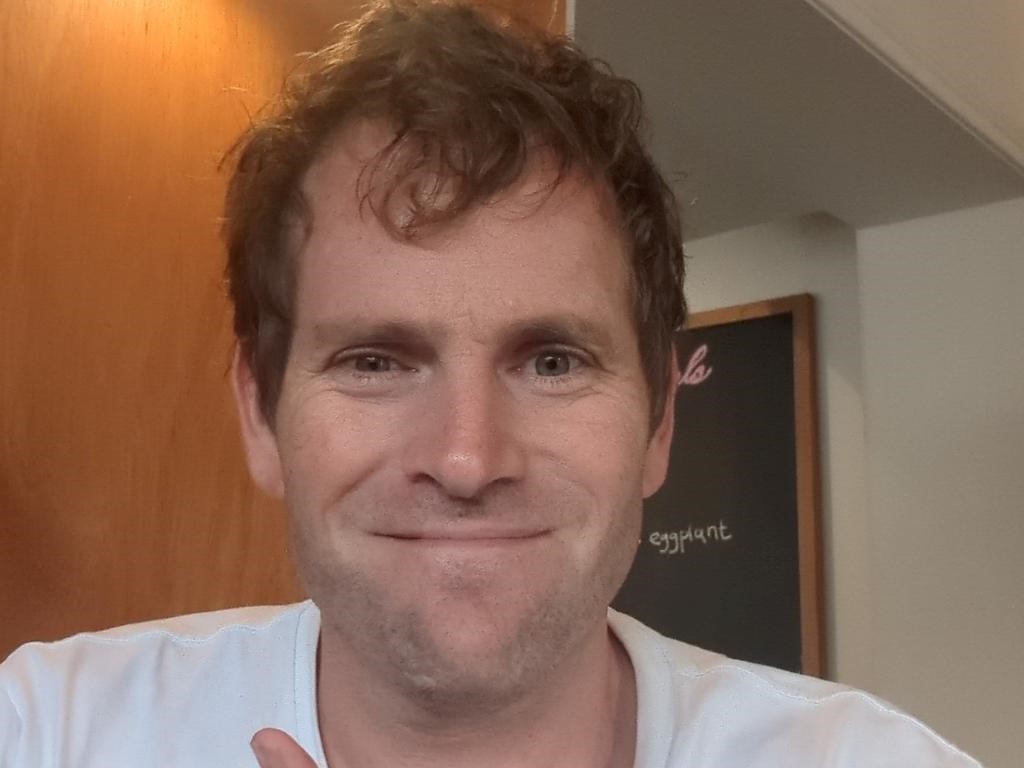
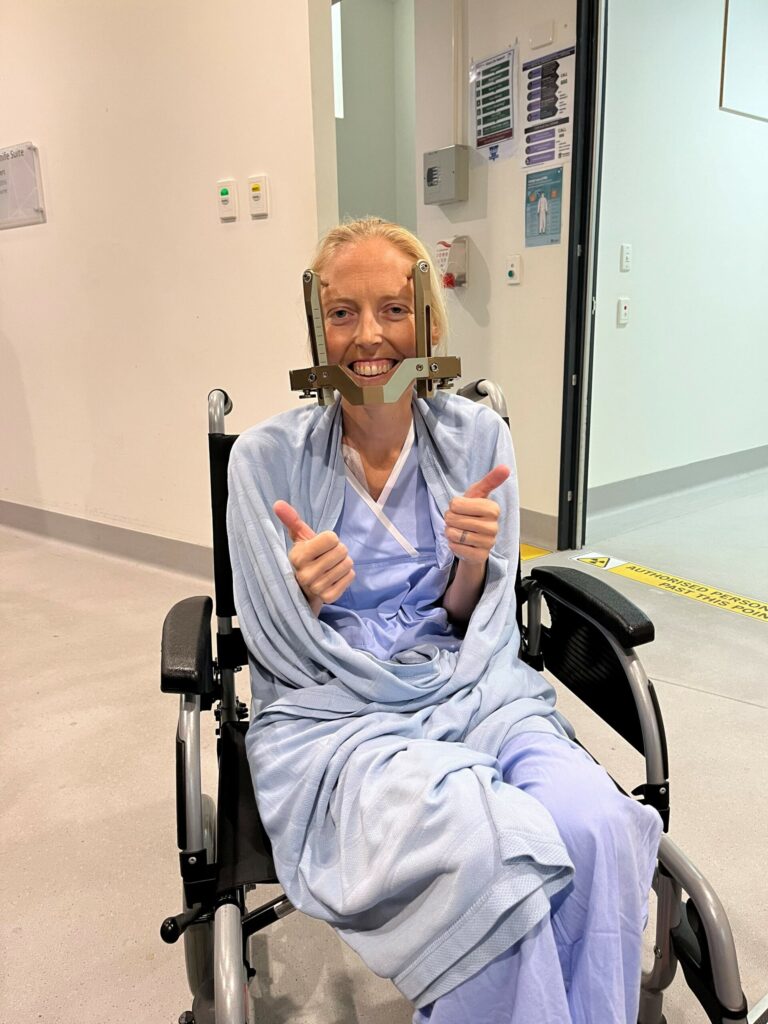
Simon’s Story – Living with VHL
I was 26, newly married and celebrating my honeymoon when I was hit with crippling headaches. What I thought was stress turned out to be a brain tumour the size of a golf ball.
After emergency surgery and a second operation due to a brain bleed, I was left permanently deaf in one ear, with chronic tinnitus and facial pain that hasn’t gone away. I spent two months in hospital learning to walk, eat and drink again. It looked like the worst was behind me.
But ten years later, back pain led to a shocking diagnosis: Von Hippel-Lindau syndrome (VHL), a rare genetic condition that causes tumours to grow throughout the body—brain, spine, kidneys, pancreas, and more. Since then, I’ve endured multiple spinal and brain surgeries, and radiation for tumours that couldn’t be removed.
Since 2020, I’ve had surgery every year. VHL doesn’t stop. It keeps coming. And each time, the risks get bigger—paralysis, disability, even death. You live in a constant state of uncertainty.
Then I learned about Belzutifan, a drug that could shrink tumours and reduce the need for ongoing surgery. It offered hope—but at $12,000 a month, it was out of reach for most patients. We made the tough decision to draw down on our mortgage to cover the cost. I was lucky. Most people with VHL are not.
But thanks to persistent advocacy from patients, families, and organisations like NeuroEndocrine Cancer Australia, Belzutifan is now listed on the Pharmaceutical Benefits Scheme. I now pay just $30 a month for a drug that has shrunk my tumours by more than 66 per cent. My surgeon was amazed.
This drug has given me breathing room. A chance to delay more surgery. A chance to live.
But while this is a massive step forward, it’s not the end of the journey. We need greater awareness of VHL, better education for healthcare professionals, and up-to-date resources to guide patients through diagnosis and care.
This condition is rare—but for those of us living with it, the impact is lifelong.
I’ll keep sharing my story so no one else has to wait as long as I did for answers—and hope.