
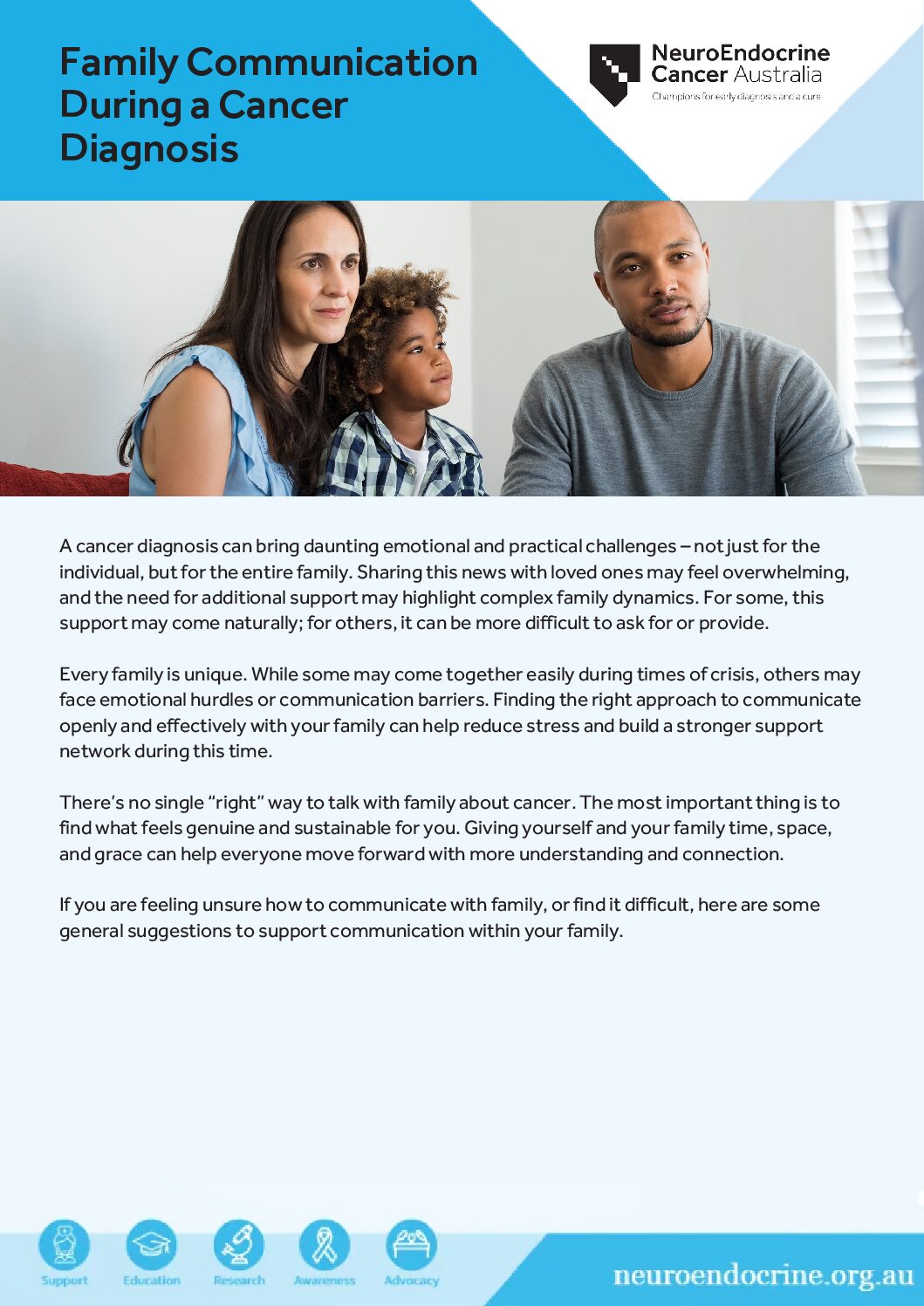
A cancer diagnosis can bring daunting emotional and practical challenges – not just for the individual, but for the entire family. Sharing this news with loved ones may feel overwhelming, and the need for additional support may highlight complex family dynamics. For some, this support may come naturally; for others, it can be more difficult to ask for or provide.
Every family is unique. While some may come together easily during times of crisis, others may face emotional hurdles or communication barriers. Finding the right approach to communicate openly and effectively with your family can help reduce stress and build a stronger support network during this time.
There’s no single “right” way to talk with family about cancer. The most important thing is to find what feels genuine and sustainable for you. Giving yourself and your family time, space, and grace can help everyone move forward with more understanding and connection.
If you are feeling unsure how to communicate with family, or find it difficult, here are some general suggestions to support communication within your family.
General suggestions to support communication within your family.
1. Communicate in a way that feels right for you
Choose the style that feels most comfortable for you. If face-to-face conversations are too difficult, consider using other forms of communication – like text messages, emails, or written notes – to gently introduce the topic.
2. Introduce the diagnosis gradually
- Talking about cancer can be emotionally overwhelming. Taking a gradual approach may help you gather your thoughts and feel more in control. You might start with:
- “I haven’t been feeling well lately. I’ve had some tests, and my doctor has explained the results to me…”
- “I need to tell you something that’s hard to talk about. Can we set aside some time to talk together?”
3. Practice what you want to say
Preparing ahead of time can help ease anxiety. Consider writing down your thoughts, feelings, and the facts you want to share. This can provide clarity and confidence when the time comes to talk.
4. Be honest and stick to the facts
Honest communication can reduce confusion or misinterpretation. Sharing how you feel and what you currently know – without overwhelming yourself or your family with too much at once – can lead to more supportive, open dialogue.
5. Allow communication to help you process emotions
Talking can help you make sense of your own feelings. Having someone listen may bring comfort and lessen the sense of isolation that can sometimes accompany a diagnosis.
6. Use non-verbal communication
Words aren’t always necessary. A facial expression, a hug, or a simple gesture can convey support and love when speaking feels too hard.
7. Ask for help with communication
Family dynamics can be complicated and ingrained. If speaking directly with some relatives feels too difficult, consider asking a trusted family member or friend to help share the news on your behalf or keep others updated when you don’t feel like talking.
8. Be patient – with yourself and your family
A diagnosis may disrupt usual roles and routines within a family system. It’s normal for stress levels and family conflict to increase. Remind one another that these changes are part of adjusting to a new reality, and that emotional reactions and coping skills may differ across family members.
9. Keep your family informed
Keeping everyone updated – at a level that feels comfortable for you – can reduce uncertainty and promote a sense of shared understanding. Assigning small tasks early on can also help your loved ones feel involved and build a sense of routine.
10. Consider a family meeting
If the situation becomes emotionally complex, a family meeting in a neutral and safe environment can help. Professionals, such as social workers, counsellors, or psychologists can help facilitate these conversations and ensure that all voices are heard with compassion.
