
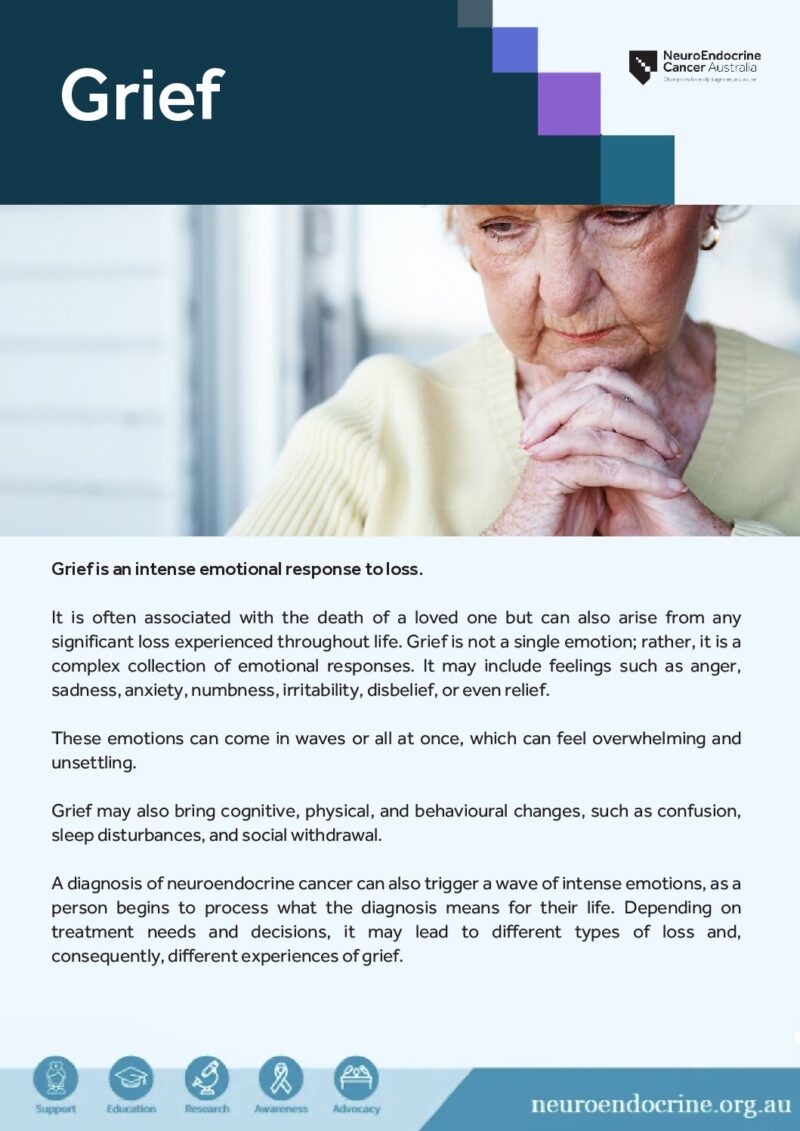
Grief is an intense emotional response to loss. It is often associated with the death of a loved one but can also arise from any significant loss experienced throughout life. Grief is not a single emotion; rather, it is a complex collection of emotional responses. It may include feelings such as anger, sadness, anxiety, numbness, irritability, disbelief, or even relief. These emotions can come in waves or all at once, which can feel overwhelming and unsettling.
Grief may also bring cognitive, physical, and behavioural changes, such as confusion, sleep disturbances, and social withdrawal.
A diagnosis of neuroendocrine cancer can also trigger a wave of intense emotions, as a person begins to process what the diagnosis means for their life. Depending on treatment needs and decisions, it may lead to different types of loss and, consequently, different experiences of grief.
Preparatory grief
Preparatory grief may occur when a person who is unwell begins to grieve the loss of their good health. This loss can also prompt thoughts about what they may miss out on while managing their condition, such as significant family milestones, career progression, or planned holidays.
Anticipatory grief
Anticipatory grief may be experienced by friends and family when a loved one has been unwell for a long time. If the illness becomes terminal, they may begin the grieving process before the loss occurs. This can trigger a range of emotions and thoughts and may also create opportunities for honest and meaningful conversations.
Traumatic and complicated grief
Grief can sometimes be traumatic, such as when a loss is sudden and unexpected. It can also be complicated, particularly if relationships were complex or challenging.
Coping with grief
Over time, many people find ways to cope with grief, often with the support of others. Some may also seek professional help. There is no right or wrong way to grieve, and no fixed timeline.
For many, grief remains a part of them, even as life gradually grows and moves forward around it.
Maintaining self-care and a sense of routine can help individuals begin to adjust to loss. Participating in memorial or bereavement activities, allowing time to process emotions, and leaning on the support of loved ones are just a few of the many ways to cope with grief.
Normalising grief as a natural response to loss can encourage open and honest conversations about the grieving process and how best to support yourself or others. Recognising that you are not alone in your experience can be comforting, and reaching out for additional support when needed can make a meaningful difference.
Establishing a new way of living with grief takes time. Reminding yourself that it is okay to seek support whenever you need it can provide reassurance and comfort along the way.
If you are a NETs patient or carer seeking additional support or to arrange a counselling appointment, please reach out to Neuroendocrine Cancer Australia: 1300 287 363 or online: https://neuroendocrine.org.au/support-resources/specialist-support-services/
Additional grief support within Australia:
Griefline – https://griefline.org.au/
Grief Australia – https://www.grief.org.au/
NALAG Grief support – https://nalag.org.au/
Palliative Care Australia – https://palliativecare.org.au/
