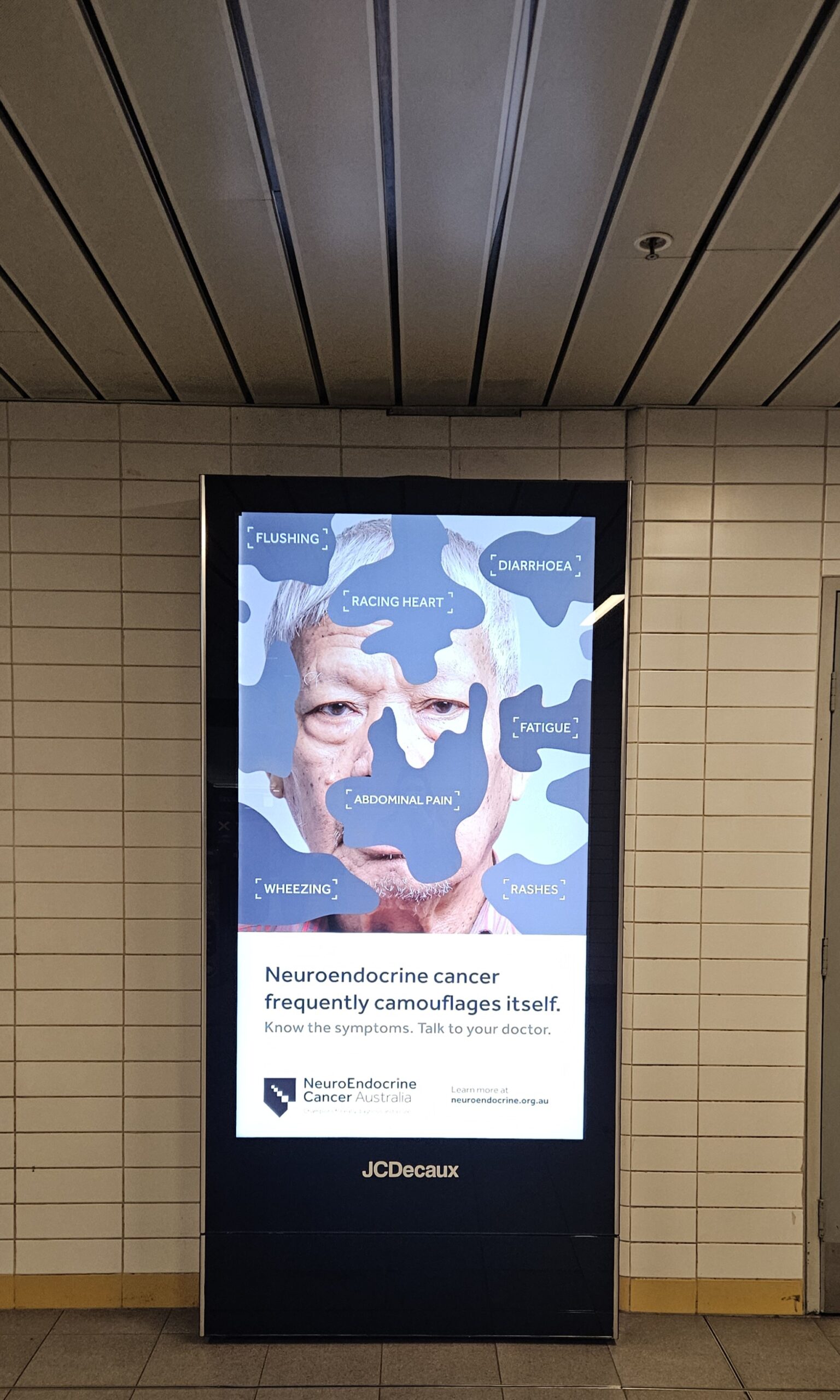
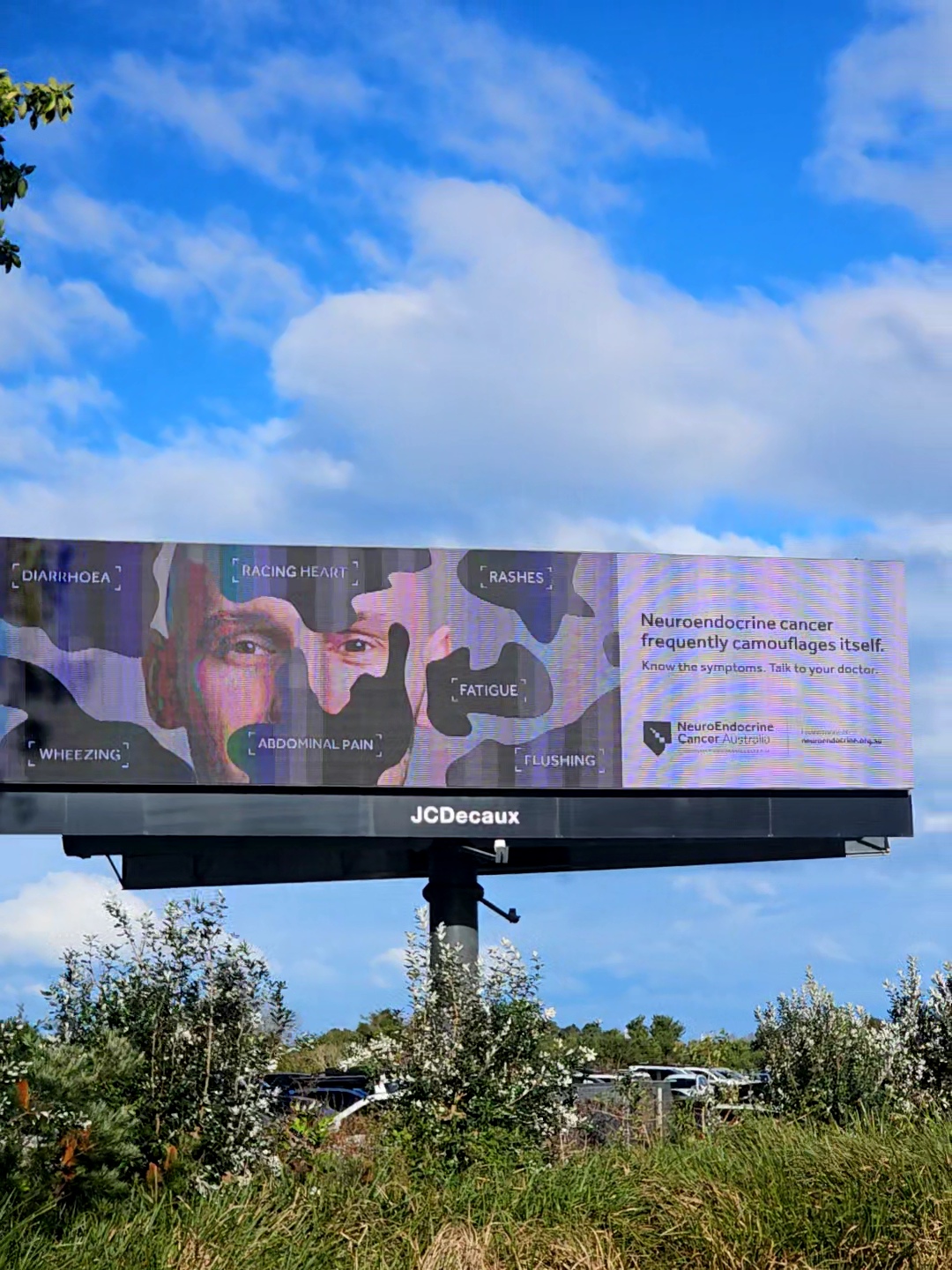
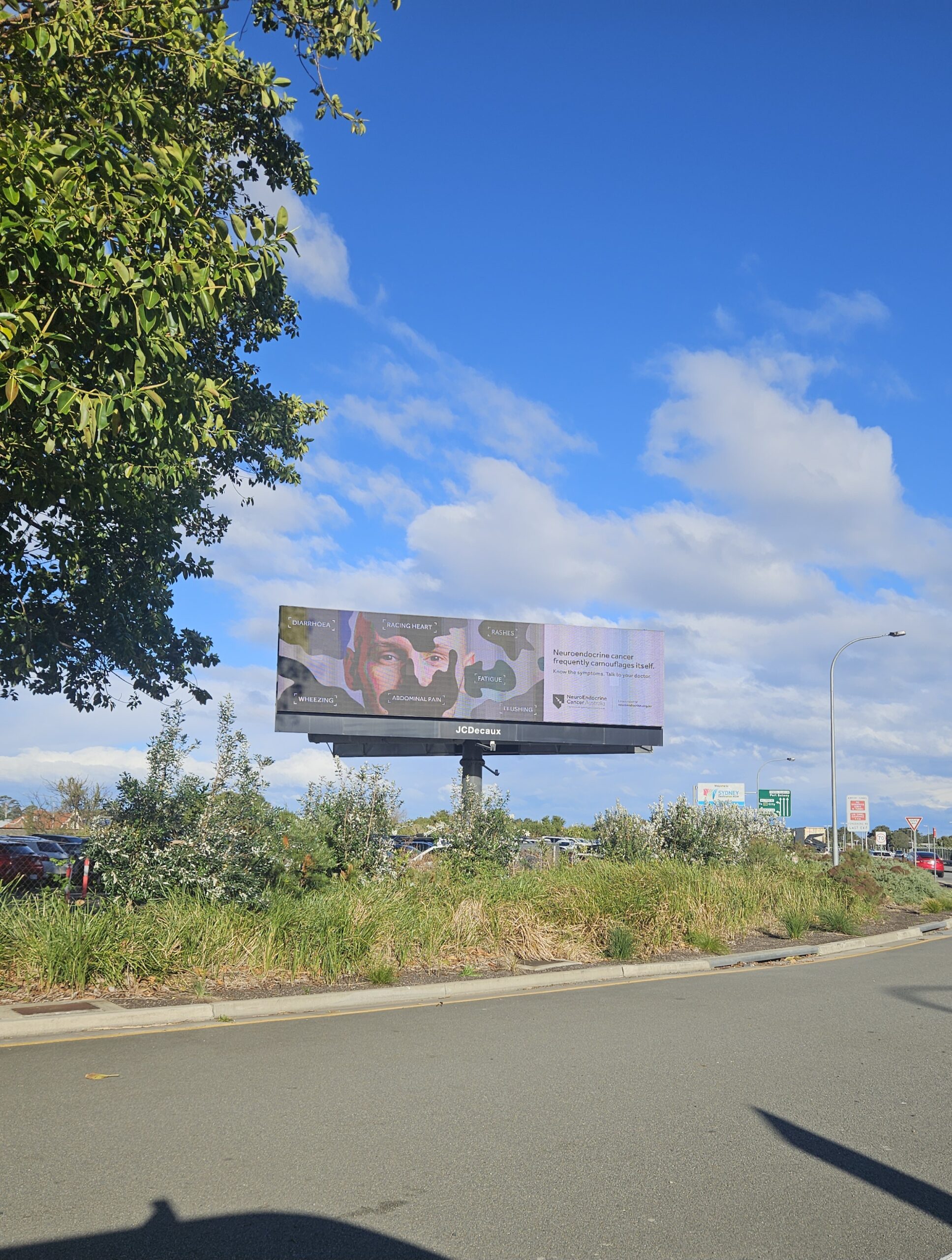
For two weeks in July, NeuroEndocrine Cancer Australia trialled a new outdoor awareness campaign across Sydney. From busy train stations and major roadways to local medical centres, our message aimed to reach commuters, passers-by and health professionals with the goal of raising awareness of neuroendocrine cancer and its symptoms.
This was a carefully considered campaign and our first time exploring outdoor advertising at this scale. Delivered through a cost-effective trial partnership, it allowed us to amplify our message while managing resources wisely. It also provided an opportunity to assess potential reach and explore options for future campaigns across Australia. The campaign is estimated to have reached over 25,000 people and received 3,931 seconds of screen time, equating to approximately 65.5 minutes.
Here’s where you may have spotted us:
Urban Panels
- Central Station
- Town Hall Station
- Martin Place Station
- Wynyard Station
- Circular Quay
Bus Stops
- Princes Highway, Tempe
- Pacific Highway, St Leonards
- Middle Head Road, Mosman
- Spit Road, Mosman
Billboards
- Eastlakes
- Sydney Airport Exit Overpass
- General Holmes Drive
- Warringah Freeway, Crows Nest
Doctors’ Offices
- Bondi Junction
- Prince of Wales Radiology
This was a small step toward a big goal: making Neuroendocrine Cancer known.
Scroll down to see a few campaign highlights: