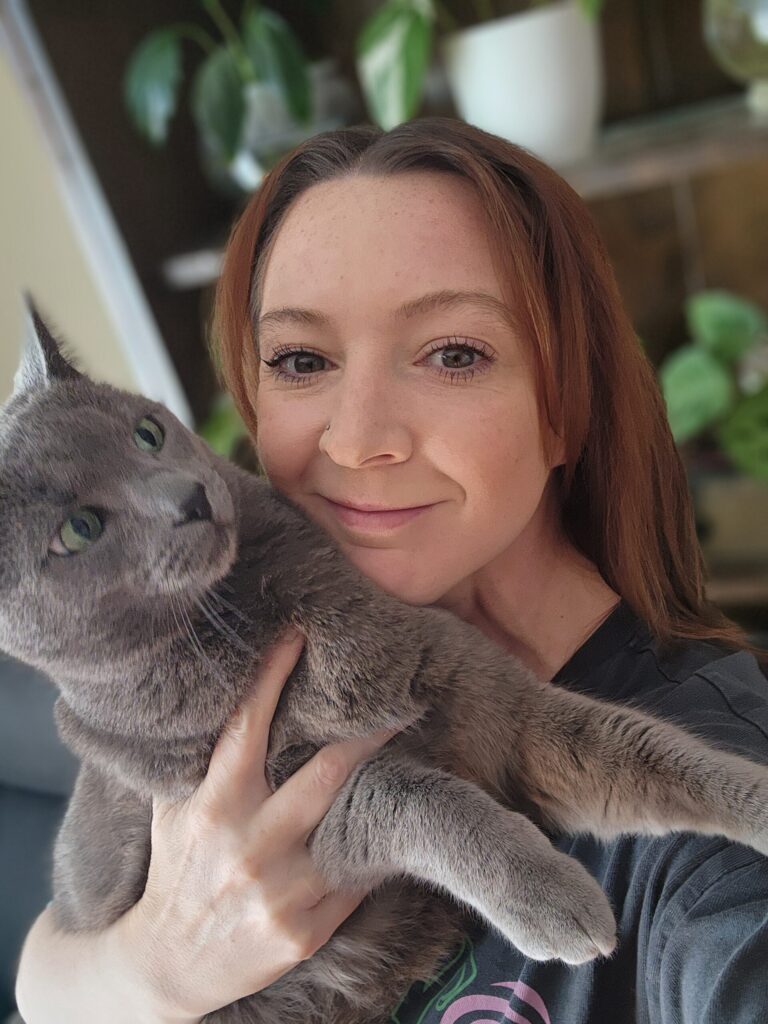
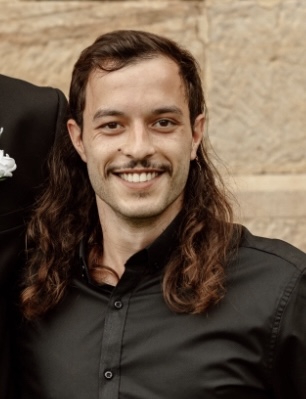
My name is Vanessa. I’m 34 years old, and I live in Canberra. I have Von Hippel-Lindau syndrome (VHL)—a rare genetic condition that causes tumours and cysts to grow throughout the body, often in places like the brain, spinal cord, kidneys, pancreas and eyes.
I was in my late twenties when I first realised something wasn’t right. I began experiencing numbness in my back, and after months of tests and uncertainty, doctors discovered a cluster of tumours in my spine. That’s when I was diagnosed with VHL.
It was a confronting moment—but not entirely unexpected. My father passed away from VHL when he was just 42, and my brother also lives with the condition. So in many ways, I grew up knowing what this disease could do. But facing it myself has been a completely different kind of challenge.
Since my diagnosis, I’ve had multiple surgeries—on my spine, my neck, and both of my kidneys. I’ve already lost my right kidney, and half of my left. With my kidney, if the current tumours grow too big, I will lose the remaining kidney and become dialysis dependent.
Hopefully, with the help of Belzutifan, it will help save both my pancreas and kidney, stopping me from ending up on dialysis and insulin for as long as possible.
Living with VHL means living with constant uncertainty. I undergo regular scans, always wondering if something new will show up. The burden isn’t just physical—it’s emotional, it’s mental, and it’s lifelong.
I’ve had to make heart breaking decisions, including accepting that I won’t be able to have children due to the risk the disease poses. VHL has touched nearly every part of my life—my health, my relationships, my ability to plan for the future. And yet, every day, I do my best to keep going.
There are moments of deep fear, but also moments of incredible gratitude—for the medical teams who look after me, for the support of my family, and for the progress that’s been made in understanding this disease.
Recently, I gained access to a new treatment that offers hope in managing VH (Belzutifan). It hasn’t erased the challenges, but it has helped me feel like I have a bit more control—like I have more time to live, not just survive.
I could still face the possibility of more surgeries but the likelihood is less. But now, I also have hope. And that’s something I haven’t always had.
For anyone living with a rare condition like VHL, I want to say: you are not alone. There is strength in speaking up, in connecting with others, and in sharing your story.
My journey is far from over. But today, I have the space to imagine a future—something as simple and powerful as planning a birthday or dreaming of travel. And that means everything.
Read Vanessa’s news article here.